


NSW Families Face $376 Annual Electricity Increase: Why Standard Solar Won’t Cut It Anymore
November 26th, 2025
New South Wales electricity bills have surged by $376 in 2025, with summer peak rates jumping to $0.47/kWh, more than double the off-peak rates. If you’re relying on standard solar panels to protect you from rising costs, here’s the uncomfortable truth: your system is likely failing you during the exact hours you need it most.
Quick Answer: Standard solar panels generate most power between 11am-2pm when you’re not home and electricity is cheapest. When you return home (2pm-8pm) and rates spike to $0.47/kWh, your solar production plummets just as your usage soars. This timing mismatch is costing NSW families an extra $1.50-$2.00 per day in peak-hour charges alone.
A National Electricity Affordability Crisis
According to the Australian Energy Regulator, New South Wales electricity bills jumped 8.2% in 2025, adding an extra $376 annually for the average family. Peak rates between 2pm-8pm have hit $0.47/kWh while off-peak remains at $0.22/kWh. That’s a 114% surcharge during the exact hours when families are home cooking dinner, running air conditioning, and using appliances.
For families using 6-8 kWh during these peak hours—running air conditioning, cooking dinner, doing laundry—this results in $135-$180 in peak-hour charges from the summer months December through February alone.
New South Wales is not alone. Southeast Queensland residents are paying an additional $340 annually (+7.7% YoY), while South Australians face increases of $119–$174 depending on their provider. Nationally, the average electricity price has risen from $0.361/kWh to $0.389/kWh between 2022-2023, a 4.7% jump that means low-income households now spend 8% of their total income on electricity. Perhaps most telling is that twenty-nine percent of Australians report finding their bills “quite difficult” to manage according to recent ABS consumer surveys.
Why Standard Solar Panels Are Failing Australian Families
The Peak Production vs. Peak Demand Mismatch
Most standard solar installations peak between 11am-2pm—exactly when your home uses the least power. During these hours, you’re generating maximum solar output but nobody’s home to use it. You end up selling excess electricity back to the grid at feed-in rates between $0.06-$0.10/kWh, essentially giving it away for a fraction of what you’ll pay later.
Then between 2pm-8pm when your family returns home and demand peaks, your solar production is declining rapidly. You’re now buying from the grid at $0.47/kWh for all that air conditioning, cooking, and appliance usage. This timing catastrophe means you’re essentially selling electricity at a 78-83% discount and buying it back at premium rates—exactly the opposite of what solar should do for your household economics.
The Australian Heat Factor: Your Solar’s Hidden Enemy
Australian summers don’t just make you uncomfortable—they devastate standard solar panel performance in ways most installers won’t explain upfront. Standard panels lose significant energy on 40°C+ afternoons, with surface temperatures soaring past 66°C and causing 10-25% power loss during the hottest hours.
Here’s the cruel irony: when you need air conditioning most and electricity costs peak between 2pm-8pm, your standard panels are delivering the least power. The combination of declining afternoon sun angle and heat degradation means your panels are underperforming exactly when each kilowatt-hour is worth the most to your household budget.
AIKO’s Advanced ABC Technology: The Ultimate Solar Solution for Australia
Temperature-Resistant Performance When It Matters Most
AIKO ABC panels are purpose-engineered for Australian conditions with an industry-leading temperature coefficient of -0.26%/°C, significantly better than standard panels that typically range from -0.35% to -0.45%/°C. While this might sound like technical minutiae, it translates to real-world impact during the scorching afternoons when your electricity is most expensive.

The practical result is that AIKO panels deliver up to $42 extra in usable power during summer months’ hottest hours—exactly when standard panels are suffering maximum heat degradation, electricity rates are at their highest $0.47/kWh, and your air conditioning demand is greatest. This isn’t about theoretical efficiency gains; it’s about capturing more value during the specific hours that determine whether your solar investment actually protects you from peak rates.
The Battery Charging Advantage
AIKO panels deliver 6-10% higher system output compared to standard panels throughout the day. While no solar panel generates power after sunset, this enhanced performance creates a critical advantage: faster, more complete battery charging. The higher output can charge your battery system up to 12% faster, storing significantly more usable energy during peak sunlight hours. This means your battery reaches full capacity earlier in the day and stores more total energy to offset your peak hour usage between 2pm-8pm.
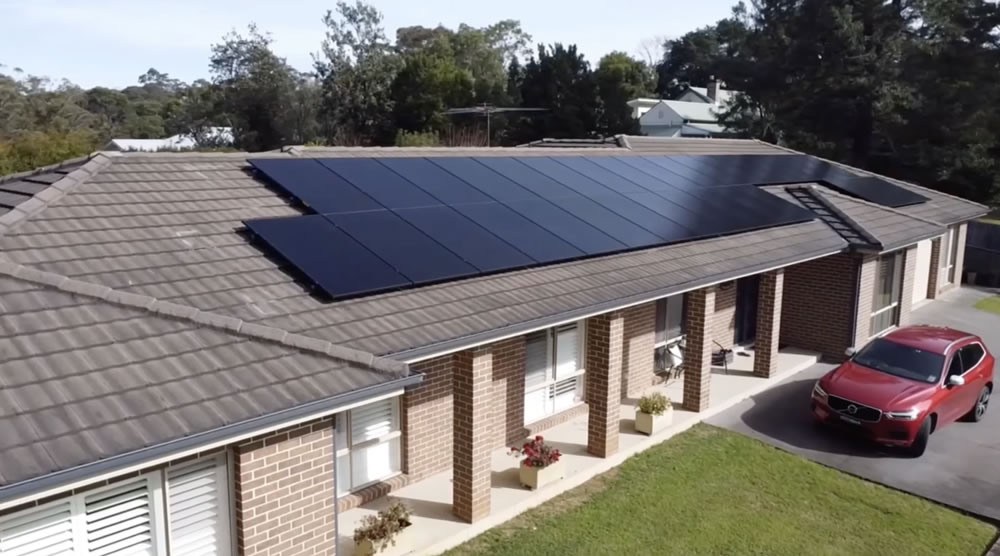
When electricity costs $0.47/kWh during evening hours, that extra stored solar energy directly translates to avoided grid purchases—this is where your real savings come from. Every additional kilowatt-hour stored during the day is one less expensive kilowatt-hour you’re buying from the grid when rates spike.
Built Safer for Aussie Roofs
Beyond performance and savings, AIKO panels carry a Fire Class A rating, the highest fire safety classification available for solar panels, providing top-tier protection for both residential homes and commercial buildings. This certification represents rigorous testing for fire resistance under extreme conditions, giving you the peace of mind that your roof-mounted system meets the most stringent safety standards.
AIKO panels are independently certified by a TÜV NORD Hot Spot Resistance Test Report that keeps shaded cells under 100°C and prevent hot spot risk, compared to 150°C or higher in standard panels.
The hotspot suppression technology delivers multiple benefits beyond fire safety. Lower operating temperatures mean less stress-induced panel wear, eliminating the micro-crack induced failures that plague standard panels over time. This translates to maximum family safety even during extreme heatwaves, reliable performance throughout the system’s life, and full warranty protection with dependable output for 25+ years. You’re not just buying solar panels but investing in technology engineered to safely withstand everything the Australian climate can throw at it.
Protect Your Family from Rising Electricity Costs
Summer 2025-26 is forecast to be brutal. The Bureau of Meteorology predicts 60-80% probability of above-average daytime temperatures across most of Australia, with over 80% chance of unusually warm nights across most of Australia. This means your air conditioner will be working overtime. Your electricity bills will explode. Standard solar installations designed for yesterday’s flat-rate pricing simply can’t protect you from today’s peak rate reality where timing matters more than total generation.
The most effective approach combines premium panels engineered for Australian conditions like with battery storage to deliver comprehensive peak rate protection. Focus on system output rather than just efficiency ratings. A panel like AIKO All Back Contact that generates 6-10% more power and charges your battery 12% faster delivers tangible savings you can measure on every electricity bill.
All technical claims and savings are supported by independent certifications and real-world tests. Download official certificates: