


How Did a Sydney Home Turn a $200 Power Bill into a $190 Credit?



Linh Pham
ANZ Marketing Manager, AIKO Australia
November 27th, 2026
Short answer
One month after installing 28 AIKO Neostar 475W panels with a 25 kWh battery, a typical Sydney family home turned its usual $200 power bill into a $189.85 credit. Over the 31-day bill, the house imported just 11.49 kWh from the grid while running a family home and charging an EV. A high-output AIKO array, a home battery and a time-based electricity plan, designed to work together, made the difference.
Key takeaways
- $390 monthly swing: from a typical $200 bill to a $189.85 credit on the first full bill.
- 11.49 kWh from the grid in a month: almost all of the home’s energy came from AIKO panels or the battery.
- Smarter exports: the battery stored midday solar and exported it in the evening at 45c/kWh.
- EV charged on sunshine: home solar charging could save another $150–$200 a month on public charging.
- 5–8 year payback: Renew Economy’s estimate for a comparable system.
The project at a glance
| Item | Detail |
|---|---|
| Location | Family home, Sydney NSW |
| Solar panels | 28 x AIKO Neostar 2P+ 475W (13.3 kW) |
| Hybrid inverter | Sungrow SH10RS 10 kW |
| Battery | Sungrow SBH 25 kWh (5 x 5 kWh modules) |
| EV charger | Sungrow AC22E |
| Install time | Under two days |
| First bill | $189.85 credit (previously ~$200 a month) |
What solar and battery system was installed?
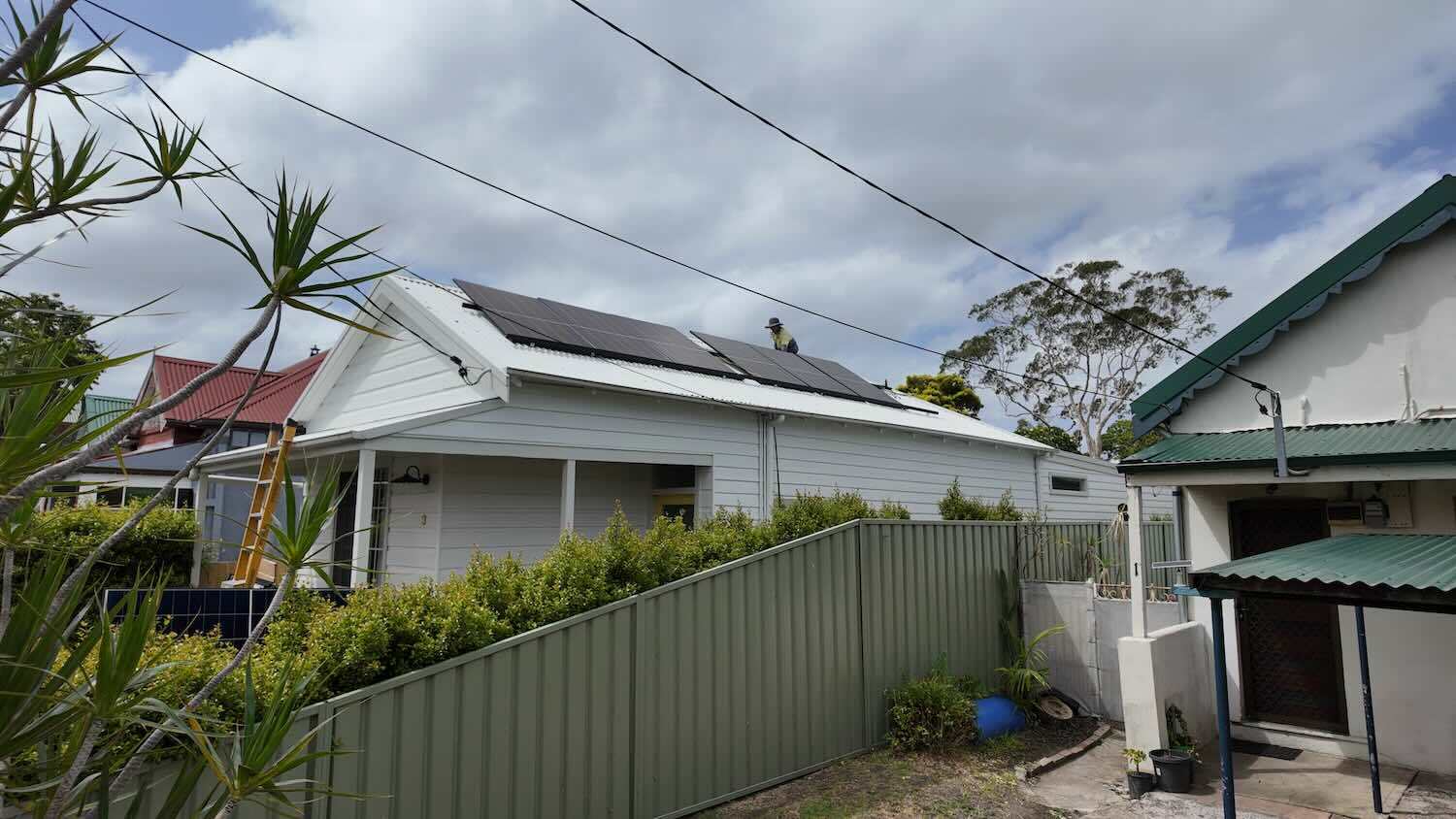
The home runs a complete solar, storage and EV charging setup, built around 28 AIKO Neostar 2P+ 475W panels. AIKO supplied 21 panels for the project, and the homeowner added 7 more to reach 13.3 kW.
The array is deliberately larger than the 10 kW inverter. On very sunny middays some output is clipped, but the bigger array produces more useful energy in the morning, afternoon and on cloudy days, which keeps the home powered, the battery charged and the EV topped up.
How was the AIKO solar system installed?
The full install took less than two days, carried out by a qualified professional installer:
- Racking: aluminium rails fixed into the roof structure, the foundation for the whole system.
- Solar panels: 28 AIKO Neostar panels lifted, aligned and clamped into place.
- Battery, inverter and EV charger: the modular battery, hybrid inverter, cabling, communications and EV charger.
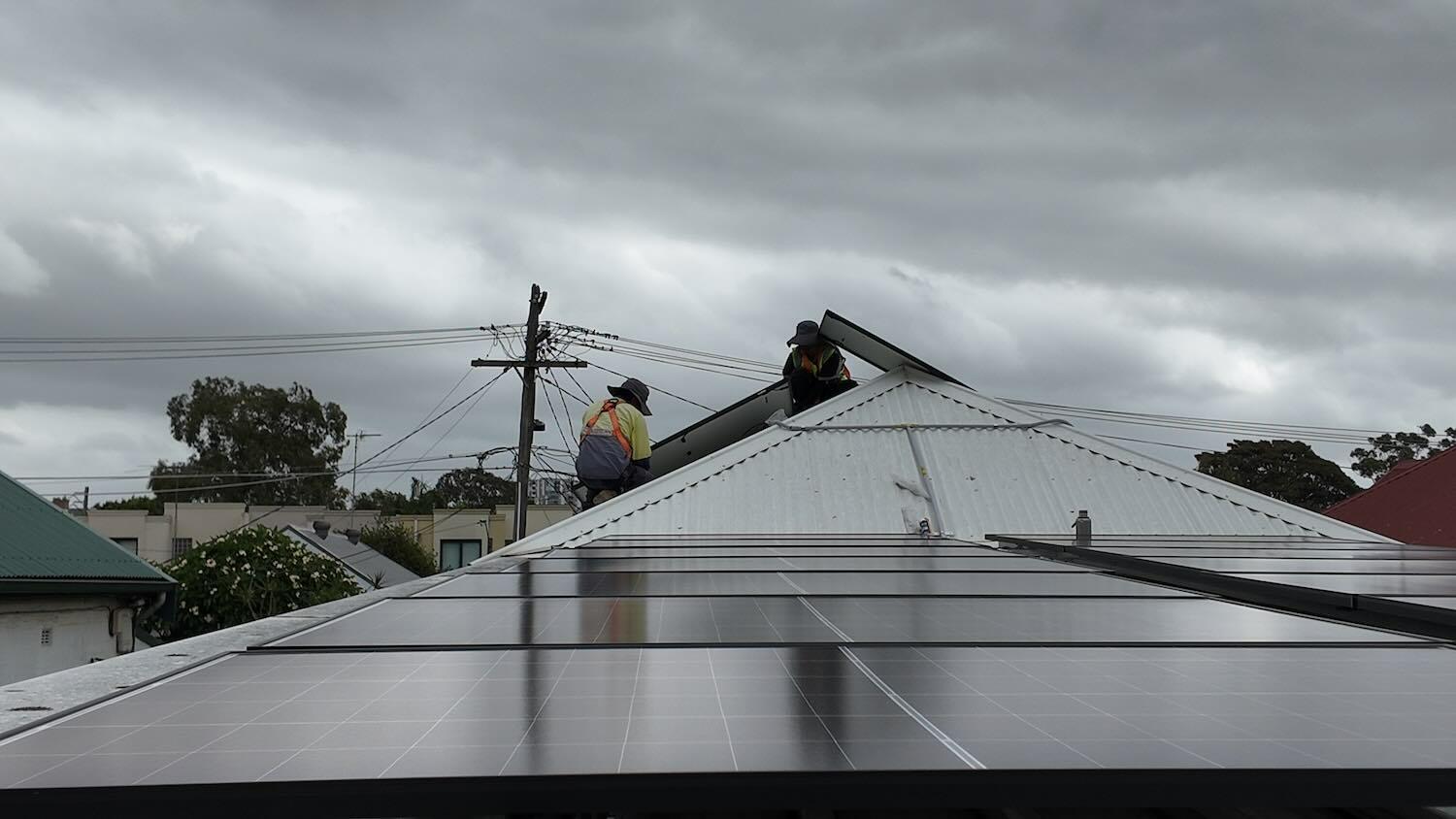
Once commissioned, the home moved from consumer to “prosumer”. It now generates, stores, schedules and exports its own energy, all managed from a phone app.
What were the results after one month?
The first full bill finished $189.85 in credit, compared with a typical $200 bill before solar and battery.
| 31-day bill | Result |
|---|---|
| Grid electricity imported | 11.49 kWh ($3.91) |
| Daily supply charges | $41.60 |
| Premium evening exports | ~522 kWh at 45c/kWh = ~$235 |
| Other exports | ~902 kWh at no payment |
| Final account balance | $189.85 credit |
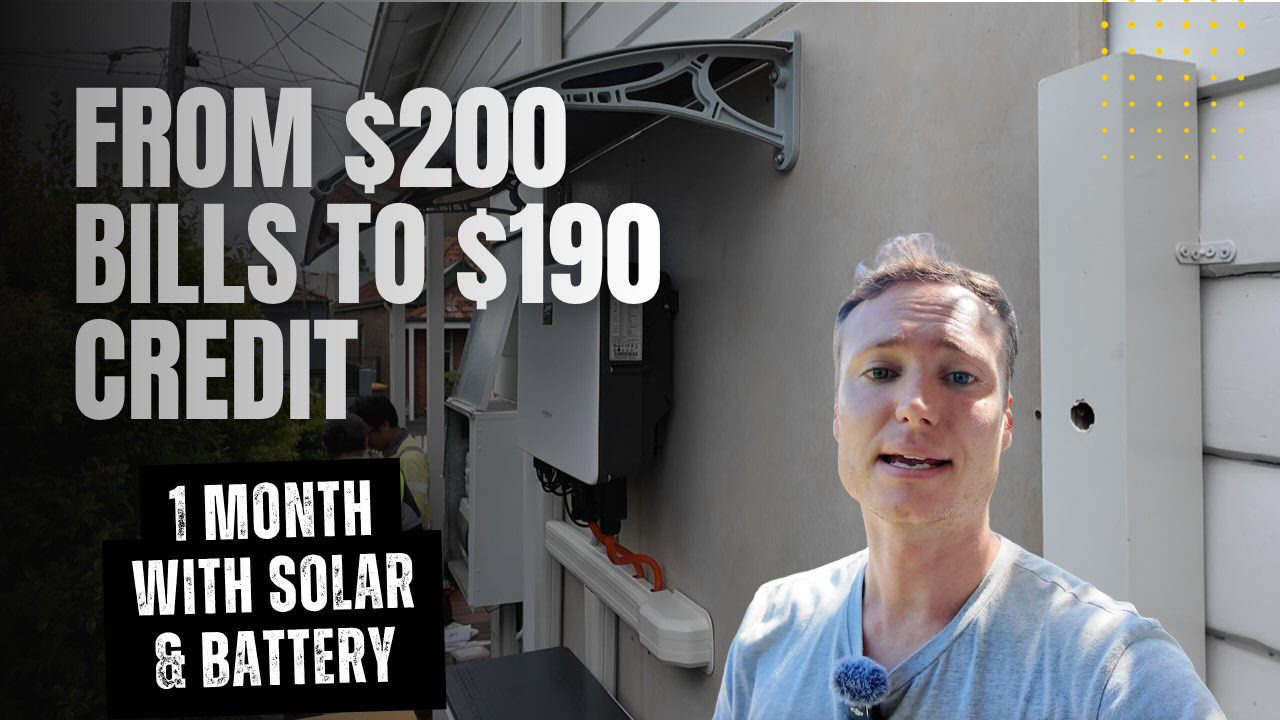
The most striking figure is not the credit, but the 11.49 kWh imported from the grid across a whole month. Almost all of the home’s electricity came from the AIKO panels directly or from solar stored in the battery.
Why did the battery make exports more valuable?
The battery moved surplus solar from midday, when exports earned nothing, into the evening peak, when they earned 45c/kWh. Of the 1,423.77 kWh exported, around 902 kWh went out during the day for no payment, while around 522 kWh exported in the evening earned around $235. That evening income covered every grid charge and left the account in credit.
How much does charging an EV on solar save?
Charging at home on solar avoids public fast-charging costs of around 50c/kWh or more. Depending on how far the car is driven, that could be worth another $150–$200 a month. The saving does not show on the electricity bill, but it is part of the system’s return.
Why does panel choice matter in a solar + battery system?
In a solar + battery home, every extra kilowatt-hour the panels produce is used, stored or exported at the best time, so panel output directly shapes the savings.
- More power per panel: at 475W each, 28 AIKO Neostar panels deliver 13.3 kW on a standard Sydney roof.
- Energy across the whole day: an oversized array keeps generating in the morning, afternoon and less-than-perfect weather, keeping the battery charged.
- Built for electrified homes: more generation covers household use, the battery and EV charging at the same time.
Frequently asked questions
How much can solar and a battery save on a power bill in Australia? In this Sydney home, 28 AIKO panels and a 25 kWh battery turned a typical $200 monthly bill into a $189.85 credit in the first month. Results vary by season, tariff and household use.
How many solar panels do I need with a home battery? This home used 28 AIKO Neostar 475W panels (13.3 kW) with a 10 kW inverter and 25 kWh battery, enough to power the home, fill the battery and charge an EV.
Is it worth oversizing solar panels against the inverter? In this case, yes. The 13.3 kW array on a 10 kW inverter produces more useful energy in the morning, afternoon and cloudy weather.
What is the payback for solar, a battery and EV charging? Renew Economy estimates around 5–8 years for a comparable system, depending on installed price, electricity plan, household demand and EV use.
Will every home get a $190 credit? No. This result came from a large array, a big battery and a 45c/kWh evening export rate. Winter output, usage and tariffs will change the result month to month.
The bottom line
This Sydney home shows what happens when solar, storage and EV charging are designed together. A high-output AIKO array produced enough energy to run the home, fill the battery and charge the car, turning a $200 bill into a $190 credit in month one. For homeowners and installers, the lesson is simple: start with enough panel output, add storage, and choose a plan that rewards exporting at the right time.
Considering solar and battery for your home? Contact the AIKO ANZ team or speak to your local AIKO installer.
Explore more from AIKO
- AIKO solar solutions for homeowners
- Never stop advancing: AIKO showcases its fourth generation of back-contact solar in Australia
- AIKO solar projects and case studies
- AIKO installer centre
Sources
- Video: How a typical Australian home becomes a small power station, Renew Economy
- How my perfectly ordinary house became a small power station, Renew Economy
- Video: From $200 bills to $190 credit – 1 month with solar & battery, Renew Economy
- How solar and a home battery turned my $200 power bill into a $190 credit, Renew Economy