


Best Solar Panels for EV Charging in Australia (2026 Guide)
January 30th, 2026
Quick Answer – Best Solar for EV Charging (2026)
- For most EV owners in Australia, aim for an 8–10kW solar system with high‑efficiency panels.
- AIKO ABC panels (up to 24.8% efficiency) maximise output on limited roof space.
- Pair with a 7kW+ EV charger; add a battery if you mainly charge at night.
Why EVs Change the Solar Equation
If you bought an electric vehicle in the last year or two, you probably saw your electricity use spike immediately. A typical EV in Australia uses roughly 14–18 kWh per 100 km depending on the model, driving style, and climate.
If you drive 15,000 km per year, that is about 2,100–2,700 kWh per year just for the car – on top of your household consumption. At a retail electricity price of around 30c/kWh, that can add $600–$800+ per year to your bills if charged from the grid.
Solar allows you to “fuel” your car with sunlight, but only if your system is sized and designed correctly. The old rule of thumb – a 6.6kW system for a typical home – is usually not enough for a home plus an EV.
How Much Solar Do You Need to Charge an EV?
To size a system properly, start with your driving habits.
Step 1: Estimate your EV energy use
Use this table as a rule of thumb.
| Annual km driven | EV efficiency (kWh/100 km) | EV energy (kWh/year) | Solar just for the EV (kW) |
|---|---|---|---|
| 10,000 | 15 | 1,500 | 3–4 kW |
| 15,000 | 15 | 2,250 | 4–5 kW |
| 20,000 | 18 | 3,600 | 6–7 kW |
Step 2: Add household usage
If your household uses 20 kWh/day (~7,300 kWh/year) and your EV needs 2,500 kWh/year, then your total demand is roughly 9,800–10,000 kWh/year.
In many Australian locations, a well-designed 8–10kW system will cover this comfortably over the year, especially if you are charging mainly in the day.
The challenge: many roofs run out of space before you get to 8–10kW – unless you use high-efficiency panels.
Why Standard 6.6kW Systems Struggle with EVs
The most common residential system size in Australia is still 6.6kW, usually built with 415W panels. That size was fine when panels were just offsetting basic household loads. With an EV, the math changes.
Peak power vs charger demand
Most home EV chargers in Australia run at 7kW on single phase. A 6.6kW solar system rarely hits its full nameplate output due to heat, orientation, and system losses.
On a hot summer afternoon, a 6.6kW system might produce closer to 5–5.5kW, which is not enough to cover a 7kW charger.
The shortfall comes from the grid, meaning you are still paying for part of your “fuel.”
Roof real estate limits
Most homes do not have unlimited north-facing roof space. Once that roof section is full, you cannot just keep adding more panels. This is where efficiency becomes critical.
The Role of High-Efficiency Panels (ABC Technology)
AIKO’s Neostar series panels use All Back Contact (ABC) technology, which moves all electrical contacts to the rear of the cell.
That delivers several advantages:
- Higher efficiency – up to 24.8%
◦ Standard TOPCon: 21.5–22.5% in advertised efficiency
◦ AIKO ABC: up to 24.8% in deliverable module efficiency - More power from the same area: Because efficiency is higher, you can fit more kW on the same roof footprint.
- No front busbars: With no grid lines on the front, more of the cell is exposed to sunlight, and the panels have a sleek, all-black look.
What this means for an EV owner
On a typical roof that could previously fit 6.6kW of standard panels, high-efficiency AIKO ABC modules might let you install 8kW+ without needing more space.
That extra capacity:
- Reaches the 7kW charger threshold earlier in the day.
- Stays closer to that level later into the afternoon.
- Provides enough surplus to run home loads while charging.
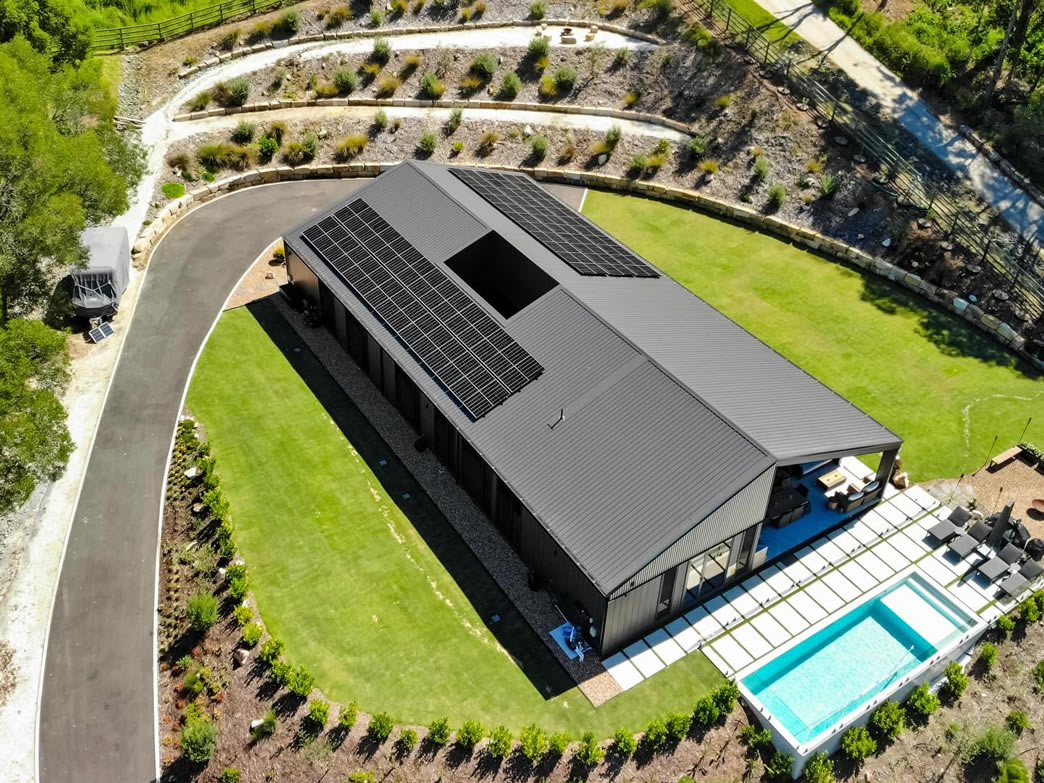
Shading, Heat, and Real World Performance
EV owners need predictability. You do not want a charging session disrupted by partial shading or heat derating.
Partial shading
In real suburbs, shadows from trees, antennas, and neighbouring houses are unavoidable. With many older panel designs, if a small part of a panel is shaded, a large part of the string loses output.
AIKO’s ABC technology and advanced cell layout help minimise the impact of partial shading, keeping the rest of the panel operating efficiently even when a small section is shaded.
For EV charging, this means your system can keep producing meaningful power even when the sun angle changes or a tree branch casts shade during part of the day.
Heat performance
Solar panels lose output as they get hot. Standard PERC panels often have temperature coefficients around – 0.34% per °C over 25°C, whereas high-efficiency ABC designs can have better coefficients (lower loss per degree).
On a 40°C summer day – common in many Australian cities – this difference can add up to several hundred watts extra output for a high-efficiency system, making EV charging more reliable during heatwaves.
Daytime vs Night-Time EV Charging
A common concern from EV owners is: “Solar only works when the sun is shining, but I charge at night – is it still worth it?”
Scenario 1: Home during the day
If you or your partner work from home, or if the EV is at home during the day:
- You can time-shift charging to late morning and early afternoon, when your solar output is highest.
- With a correctly sized system, much of your charging can be fully covered by solar generation.
Scenario 2: Out during the day, charge at night
If you are mostly away during the day:
- Solar still cuts your bill by offsetting your household usage, freeing up budget for EV charging at night.
- Oversizing your system and/or adding a battery can let you store solar energy generated during the day and use it to charge in the evening.
In both scenarios, high-efficiency panels give you more usable energy from your roof, which improves the economics of night-time charging too.
Sample EV + Solar System Designs (By Use Case)
Below are simplified examples (your installer will customise based on your roof, location, and tariffs).
Family with One EV (Queensland)
- Home usage: 18–20 kWh/day.
- EV: 12,000 km/year (~1,800 kWh/year).
Recommended system:
- 8kW AIKO Neostar ABC
- 7kW single-phase inverter
- Optional 10–13kWh battery
This setup can:
- Cover most household needs.
- Provide enough daytime surplus to cover a large portion of EV charging, especially if some charging is scheduled during the day.
High-Usage Household with Two EVs (Queensland)
- Home usage: 25+ kWh/day (pool pump, ducted AC).
- EVs: 25,000+ km/year combined.
- Recommended system:
◦ 10kW–13kW AIKO Neostar ABC (depending on roof)
◦ 10kW inverter
◦ 13–20kWh battery
Here, high-efficiency panels are essential because you need high daily generation and roof space may be limited despite the higher demand.
Common Mistakes When Buying Solar for EV Charging
- Undersizing the system
Copying your neighbour’s 6.6kW system when you have an EV (and maybe a planned second one) almost guarantees you will still rely heavily on grid power. - Choosing low-efficiency panels
Opting for the cheapest panels fills your roof quickly but may not deliver the power you actually need, especially as your usage grows. - Ignoring future electrification
Many households start with an EV and later switch to induction cooking, heat pump hot water, and more AC. Plan your system to handle these future loads. - Not considering shade and orientation
A premium, high-efficiency panel in the wrong spot can still underperform. Good design and layout are as important as the panel choice.
Is a Battery Necessary for EV Charging?
Batteries are not mandatory, but they change how you use solar for EVs.
When a battery makes sense
- You are away during the day and mostly home at night.
- You have time-of-use tariffs with higher evening prices.
- You value backup power during outages.
In these cases, pairing high-efficiency panels with a medium sized battery (10–13kWh) can let you store surplus solar and use it to charge the EV after sunset.gridless+2
When you can skip the battery (for now)
- You are regularly home during sunny hours.
- You can schedule charging during the day.
- Your grid tariffs are relatively flat.
You can start with panels + EV charger only, then add a battery later once you see your usage and tariffs in practice.
Recommended System Specs for EV Owners
For most Australian EV owners in 2026, an ideal spec list looks like:
- System size: 8–10kW minimum (larger for two EVs).solarpowernation+1
- Panels: AIKO Neostar ABC, 24%+ efficiency to maximise roof output.greenlightsolar+1
- Inverter: 7–10kW, EV-charger-compatible, with monitoring.
- Optional battery: 10–20kWh depending on usage patterns.
- Smart EV charger: Integrated with solar/battery to prioritise solar charging.
This configuration gives you enough headroom to grow into full home electrification and additional EVs over the next decade without re-doing your entire system.
FAQ: Solar for EV Charging in Australia (2026)
Is 6.6kW enough to charge an EV in Australia?
A 6.6kW system can help, but it is rarely enough to cover both household usage and regular EV charging, especially if you drive more than 10,000 km per year. Most EV owners are better off with 8–10kW and high-efficiency panels.
Do I need a battery to charge my EV from solar?
No. If your EV is home during the day, you can charge directly from solar without a battery. If you mostly charge at night, a battery improves self-consumption but is optional based on your budget and tariffs.
What are the best solar panels for EV charging on a small roof?
On tight roofs, efficiency is everything. Panels such as AIKO’s ABC series, which reach up to 24.8% efficiency, are ideal because they allow you to install more kW on the same footprint than standard PERC panels.
Can I make my EV charger only use solar?
Many smart chargers can prioritise solar by monitoring your export and matching charging power to available surplus. Your installer can configure this with compatible inverters and chargers.
Is it still worth it if I charge mostly at night?
Yes. Your solar system can offset daytime household usage and, with the right size and possibly a battery, significantly reduce the cost of night-time EV charging as well. Discover why AIKO is best for battery charging here.
Prefer to talk to a local expert? Find an AIKO-certified installer in your area.