

Global PV Leaders Convene to Define
the Next Era of BC Technology
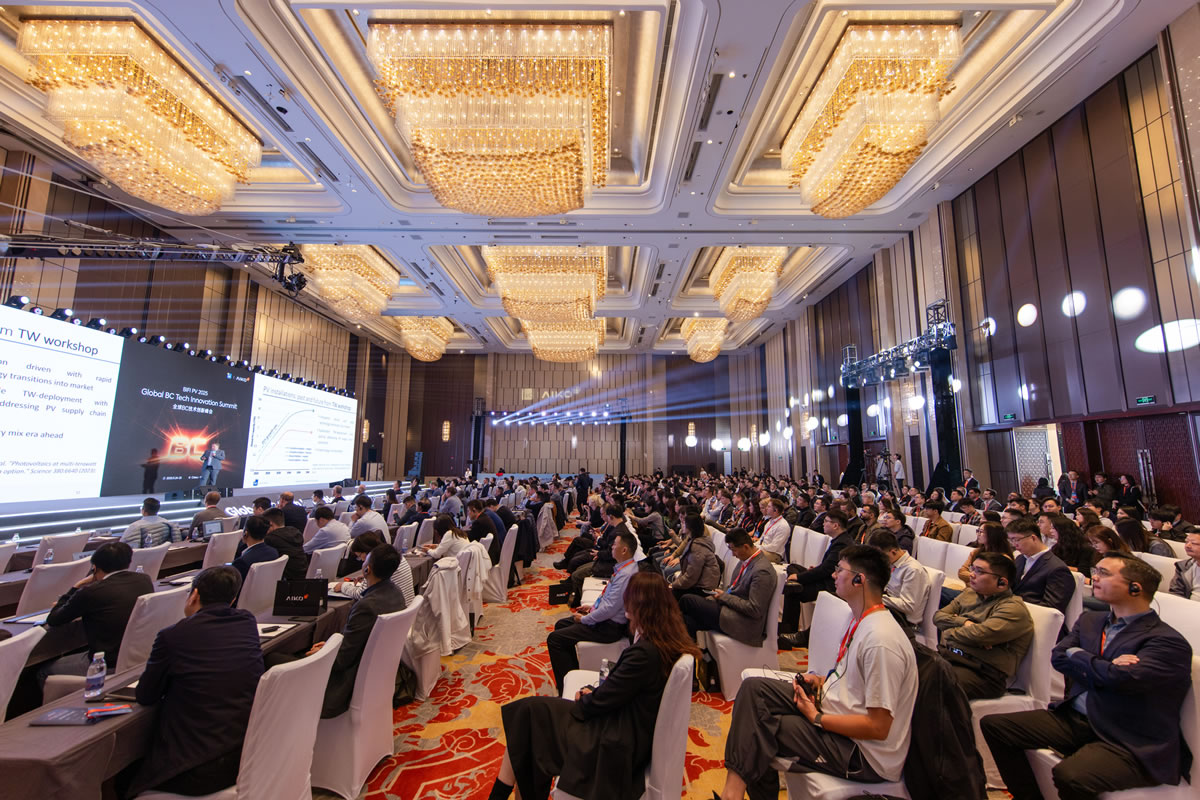
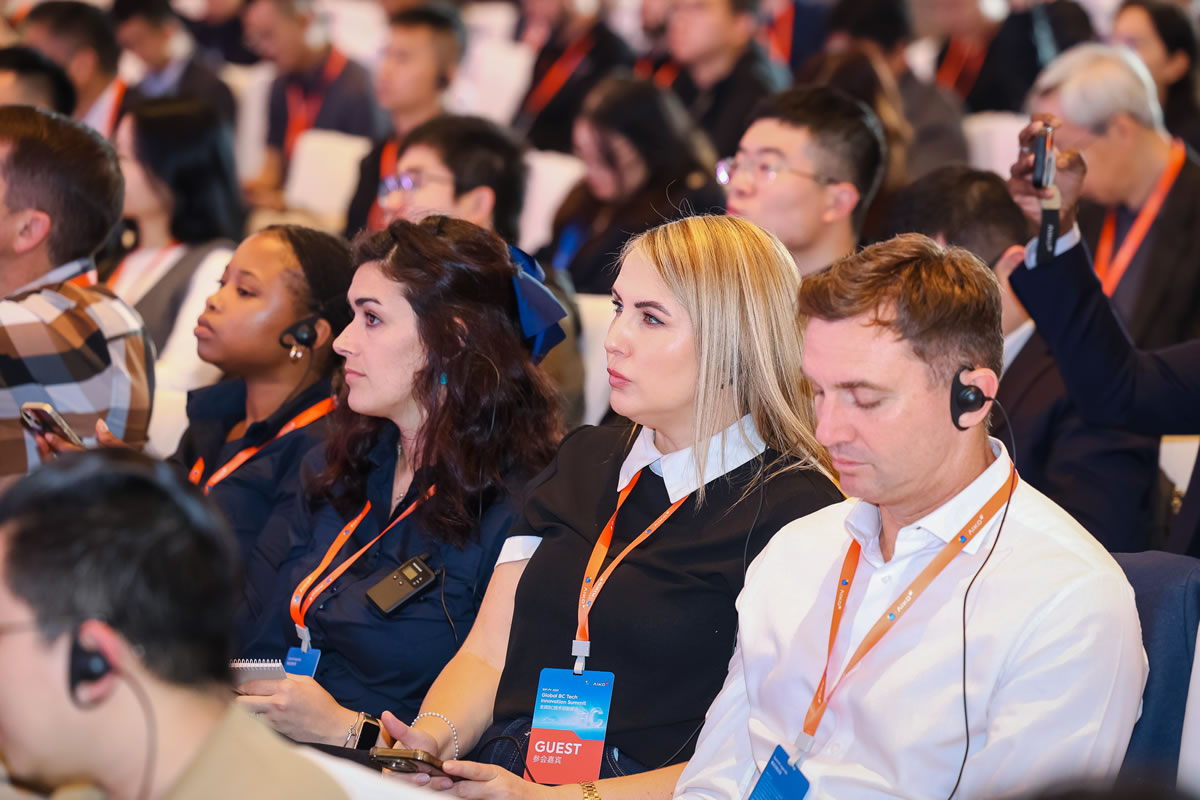
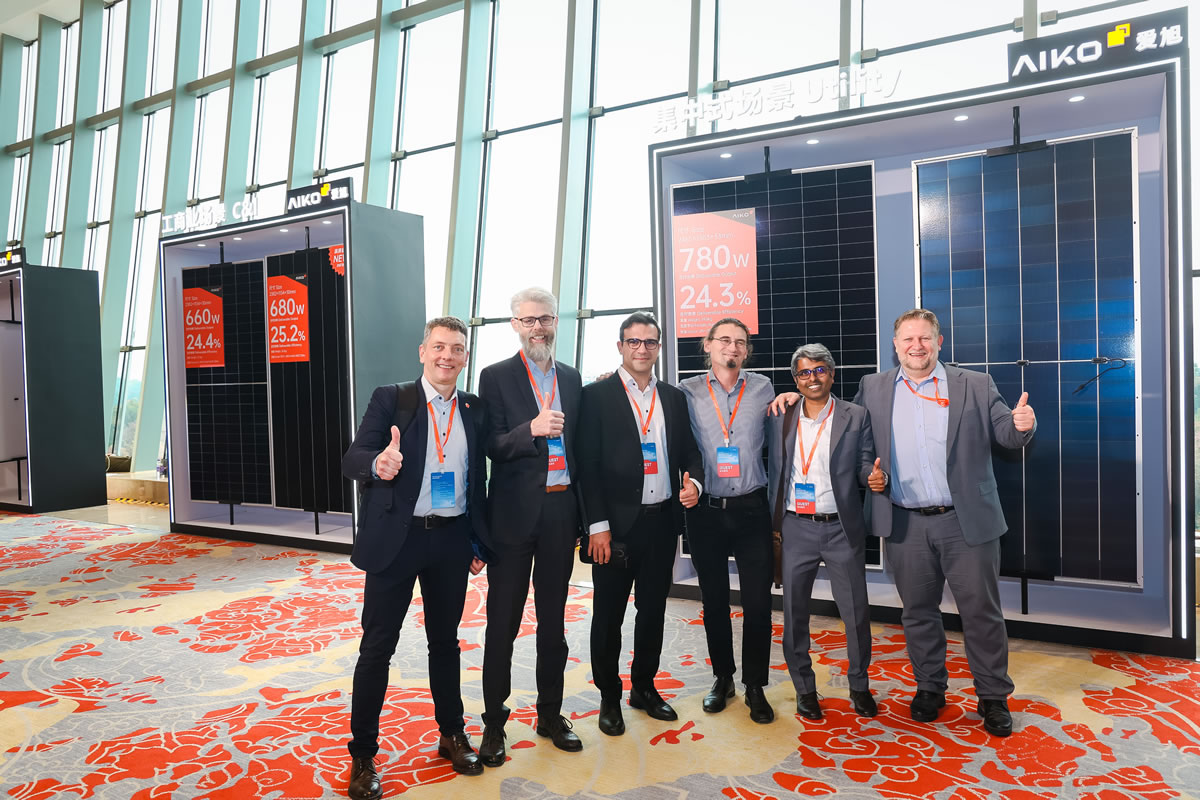
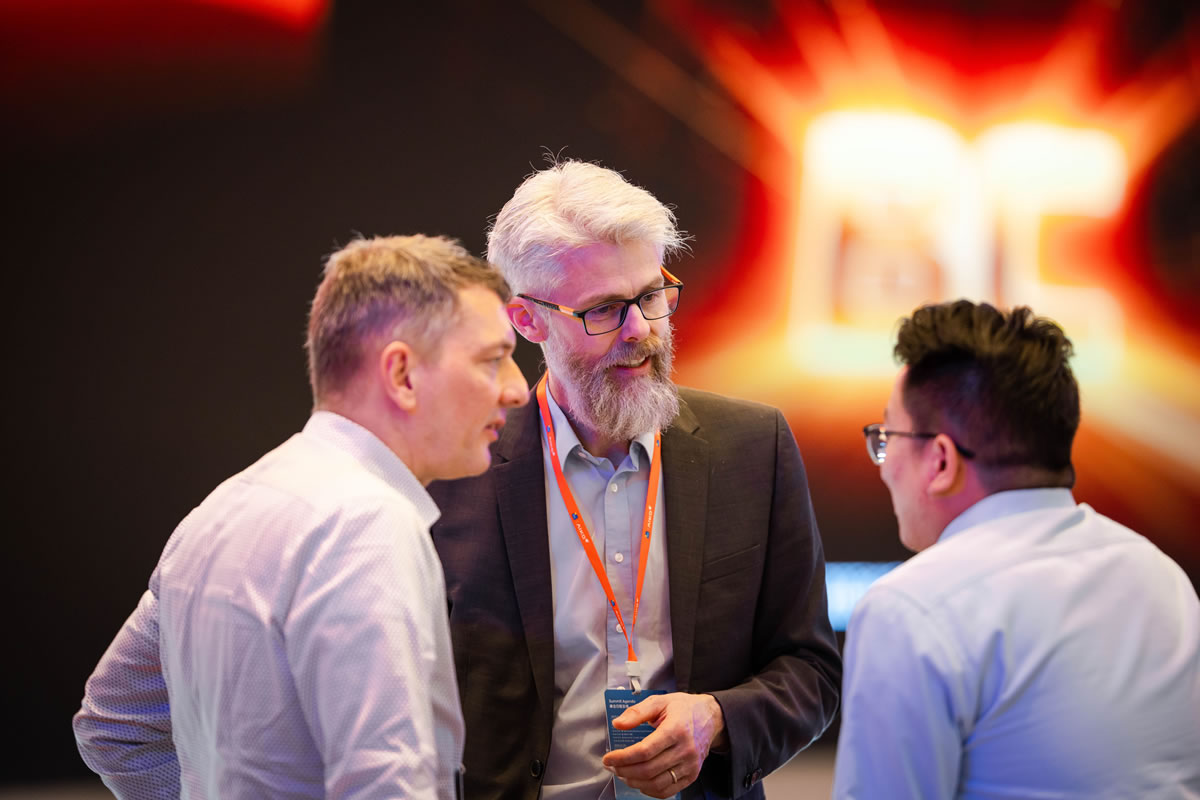
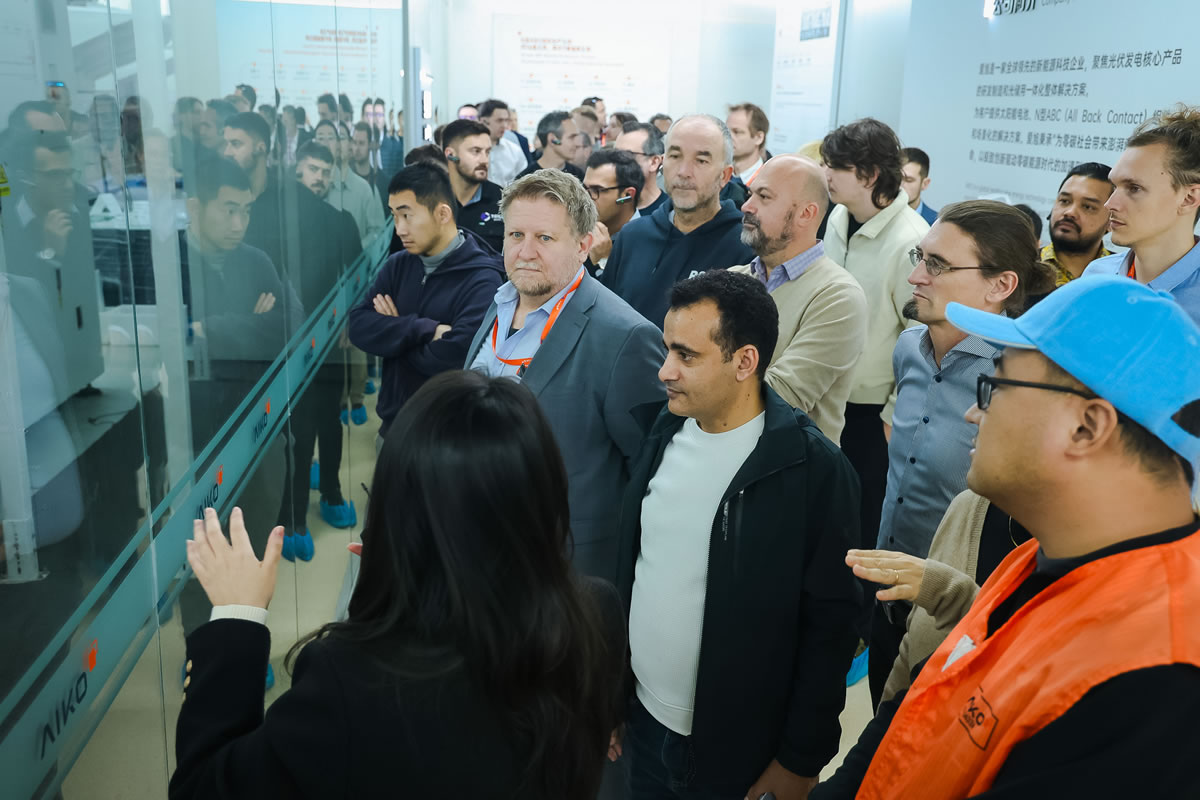
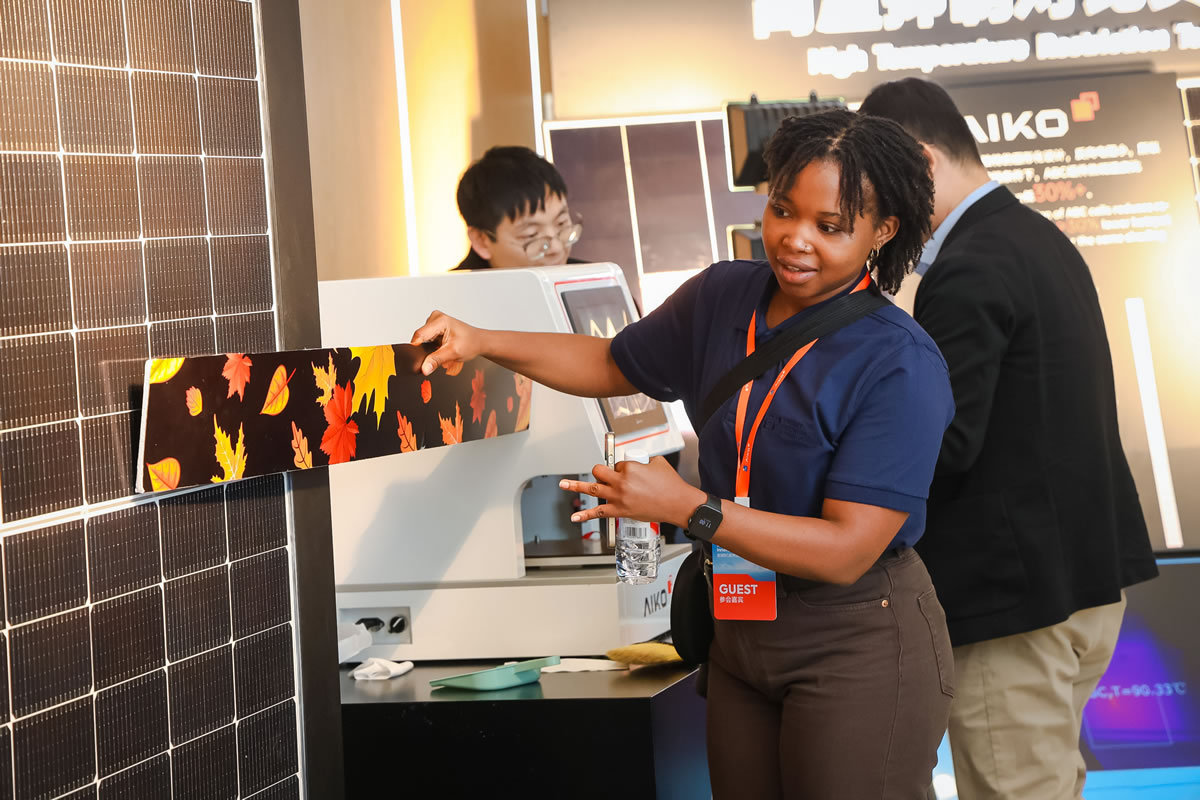
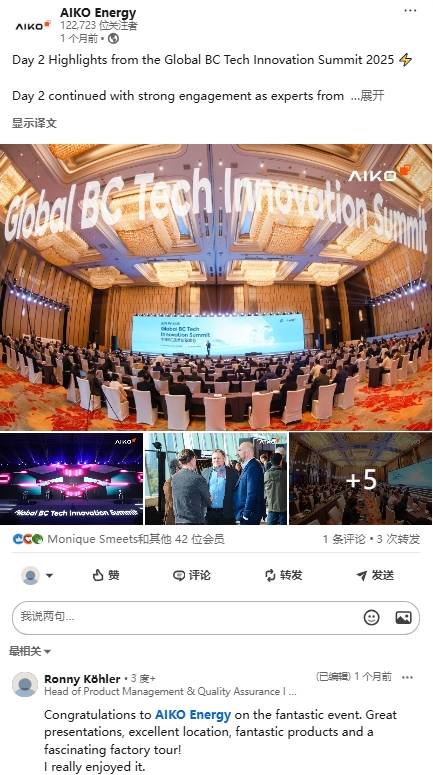
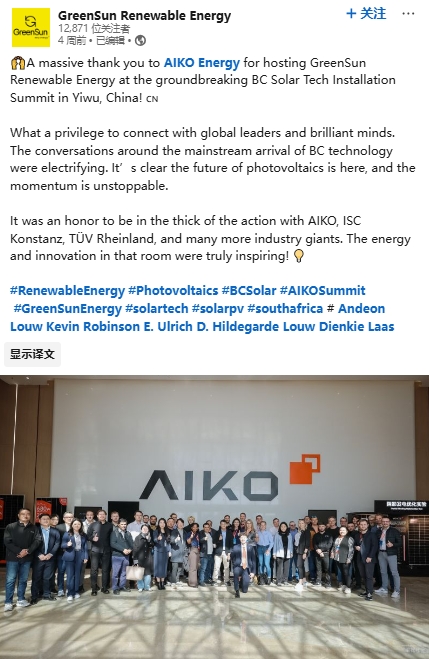
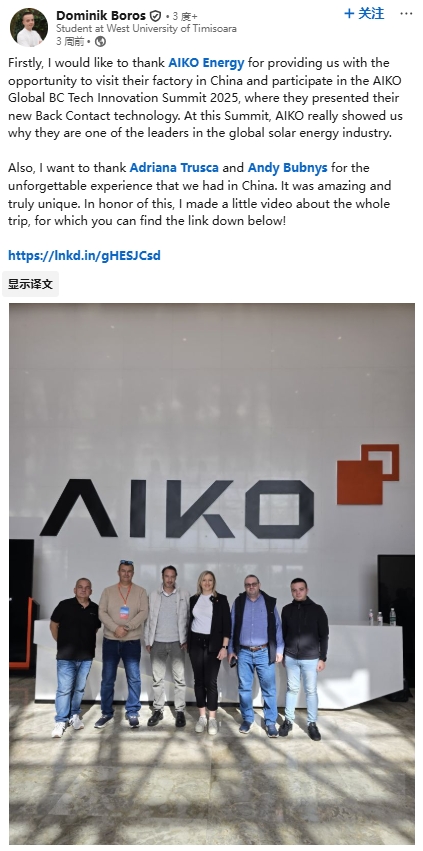
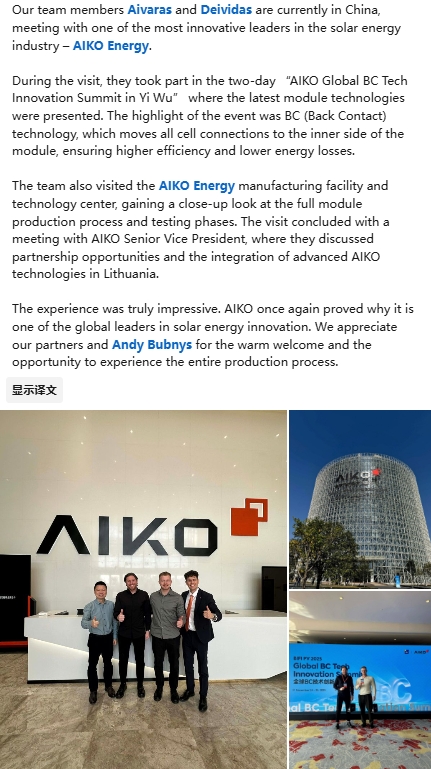
Yiwu, China, November 25, 2025 – The global solar industry experts converged in Yiwu for the landmark Global BC Tech Innovation Summit and the 14th bifi PV Workshop, held successfully on November 24-25. Co-organized by International Solar Energy Research Center Konstanz (ISC Konstanz) and AIKO, the summit attracted over 600 leading research scholars, technical experts, and top managers from prominent PV companies and institutions worldwide, marking a significant milestone in the advancement of back contact (BC) technology.
The bifiPV Workshop, a premier global academic summit for the PV industry, has a history of fostering high-level dialogue in locations including Konstanz, Amsterdam, Denver, and Doha. Following its 2024 edition in Zhuhai, this year’s event returned to China, specifically to Yiwu, a hub for advanced BC cell and module manufacturing, to inaugurate a new chapter in BC technology development.
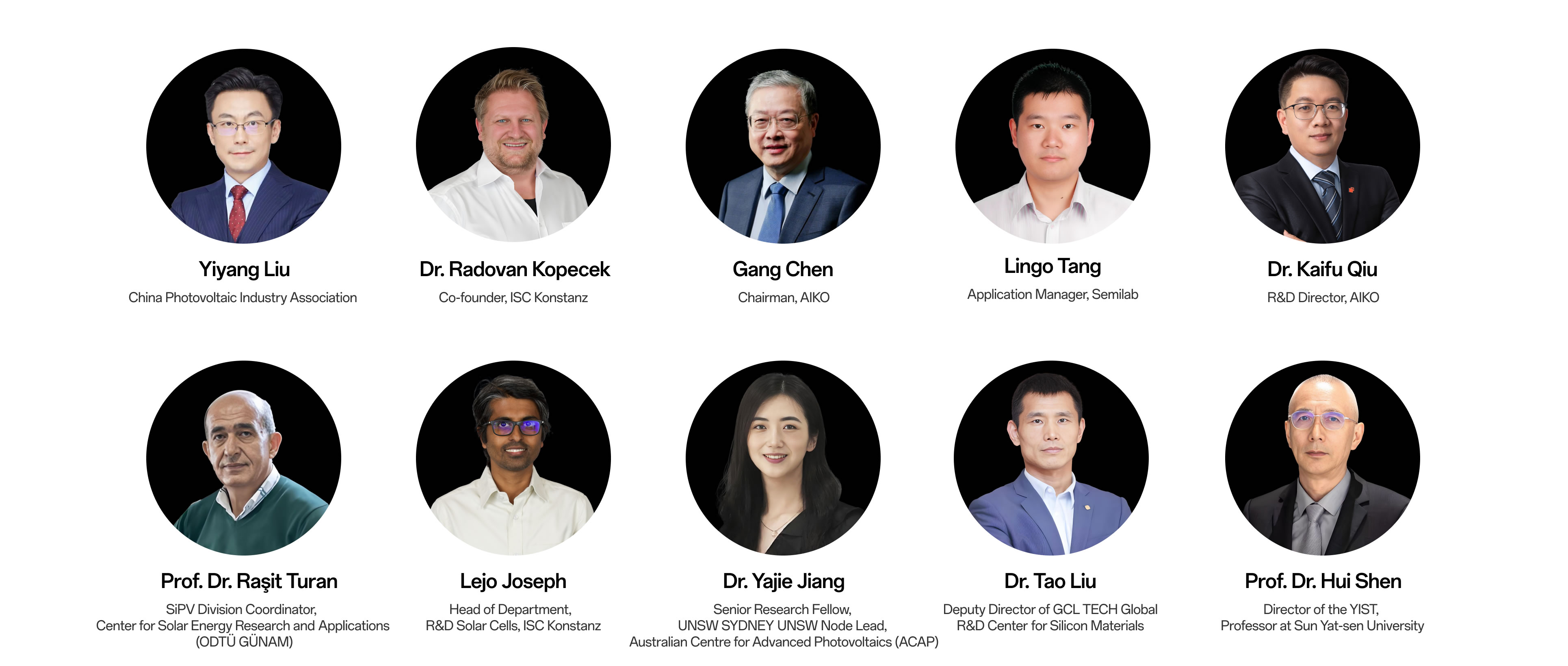
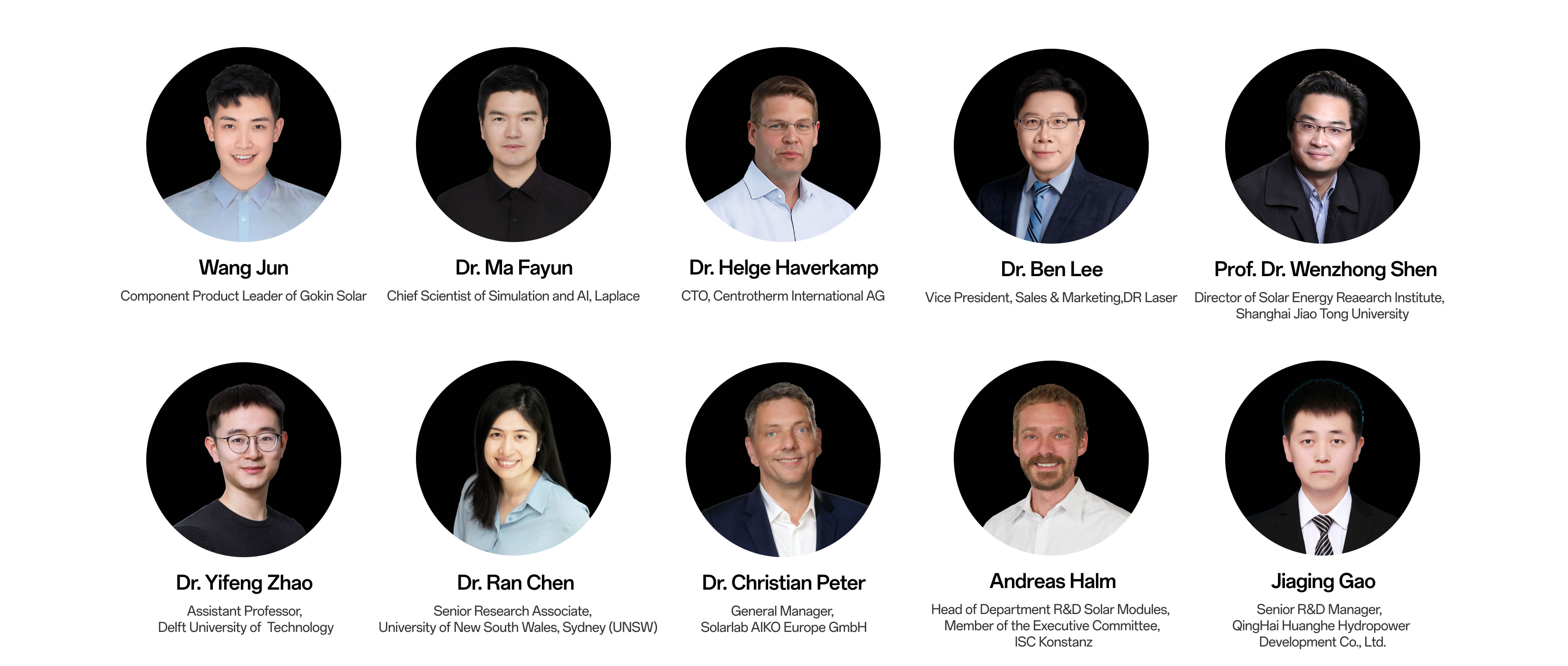
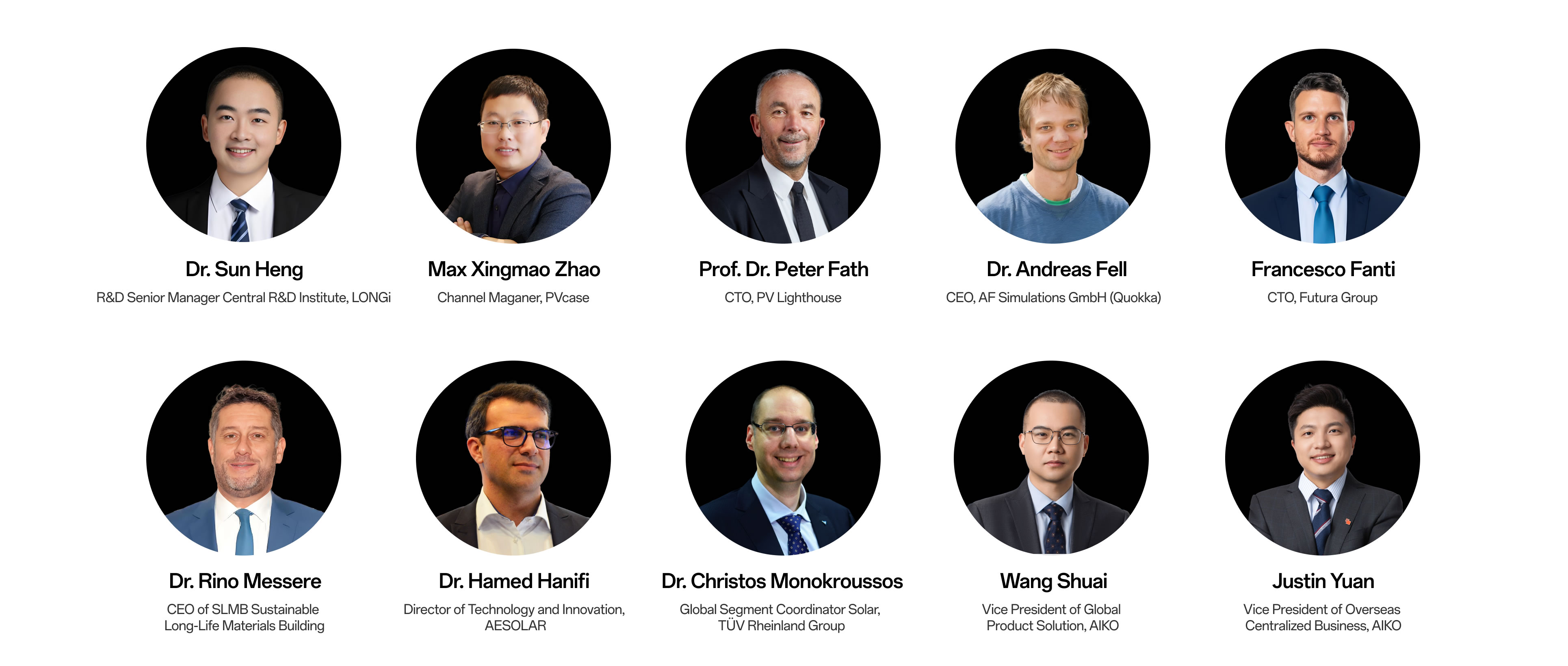
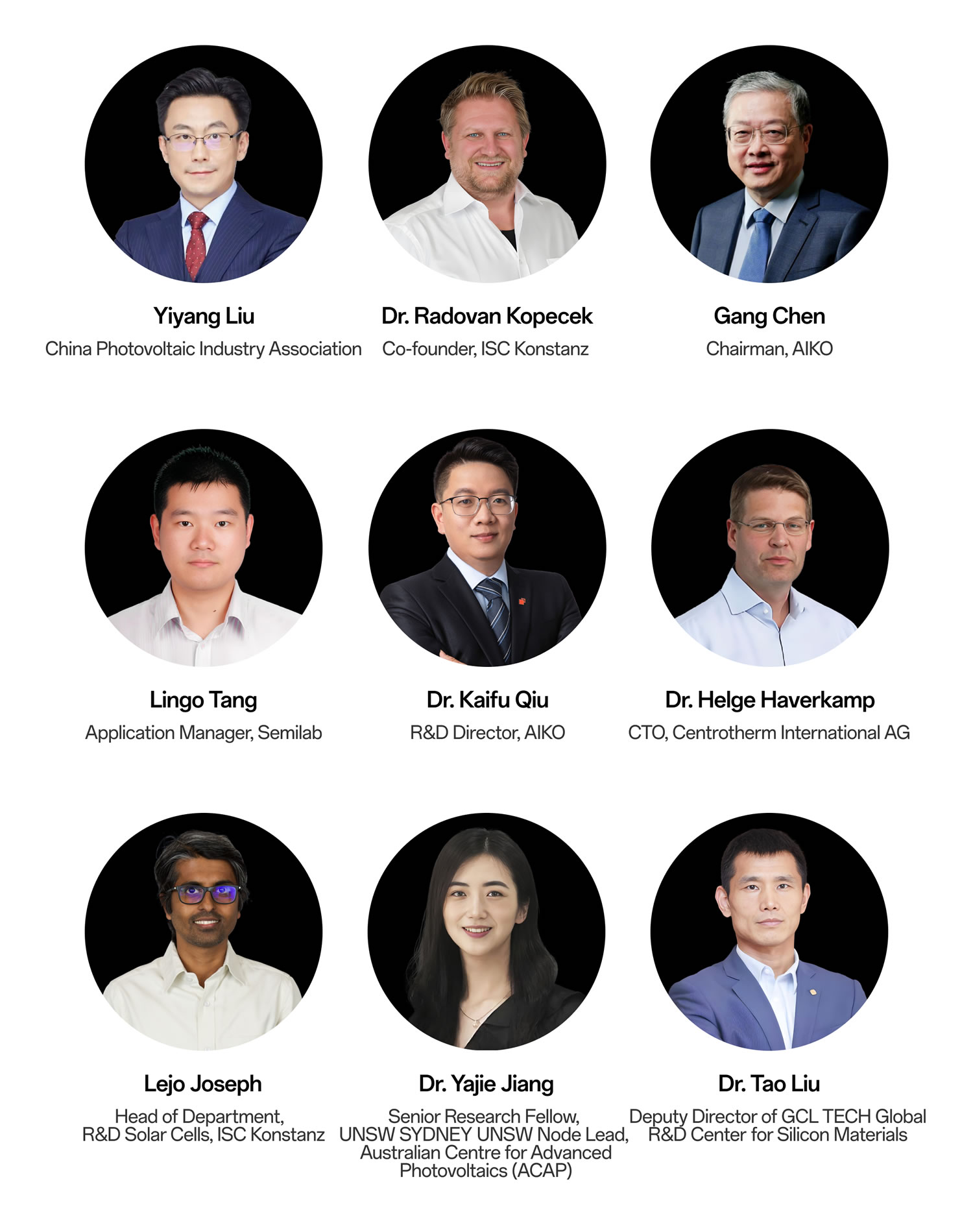
Summit Agenda
09:30 – 11:00
1.Welcome and opening
Welcome Speech
Yiwu Municipal Government:Jianhua Mao
Welcome Speech
CPIA:Yiyang Liu
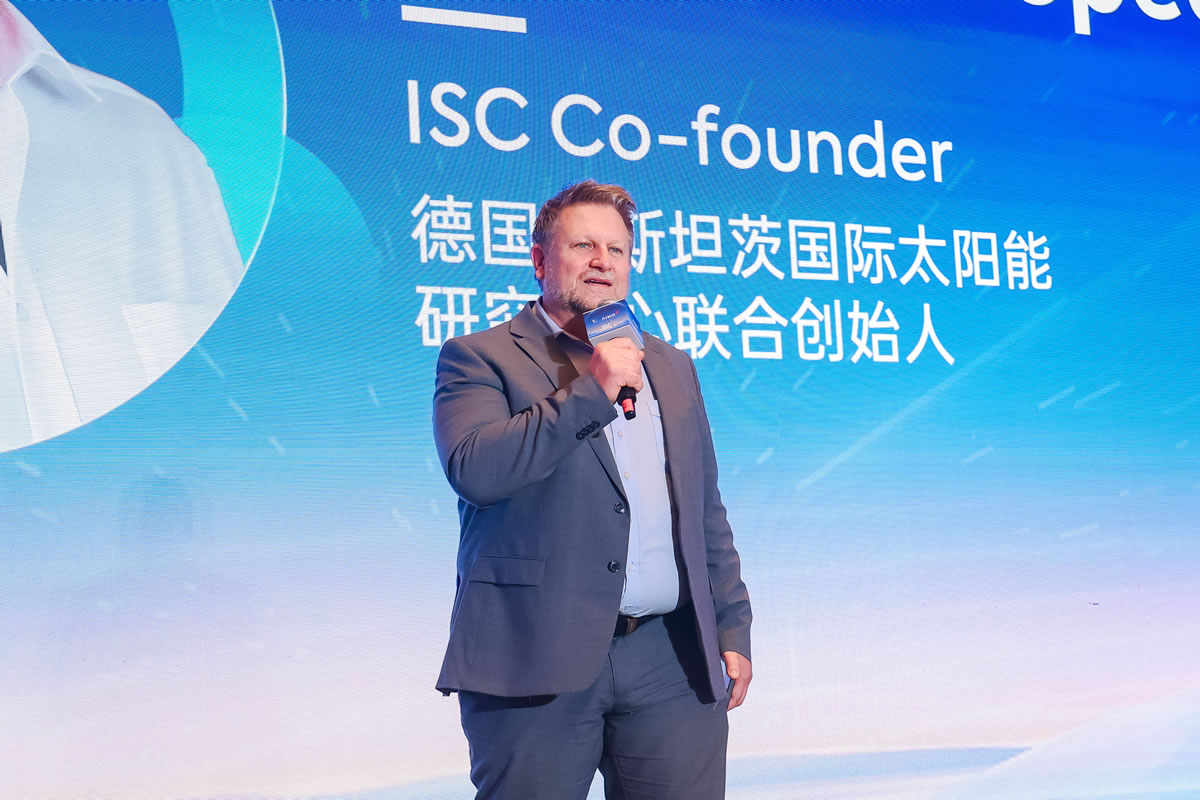
Cofounder and Director of ISC Konstanz:Radovan Kopecek
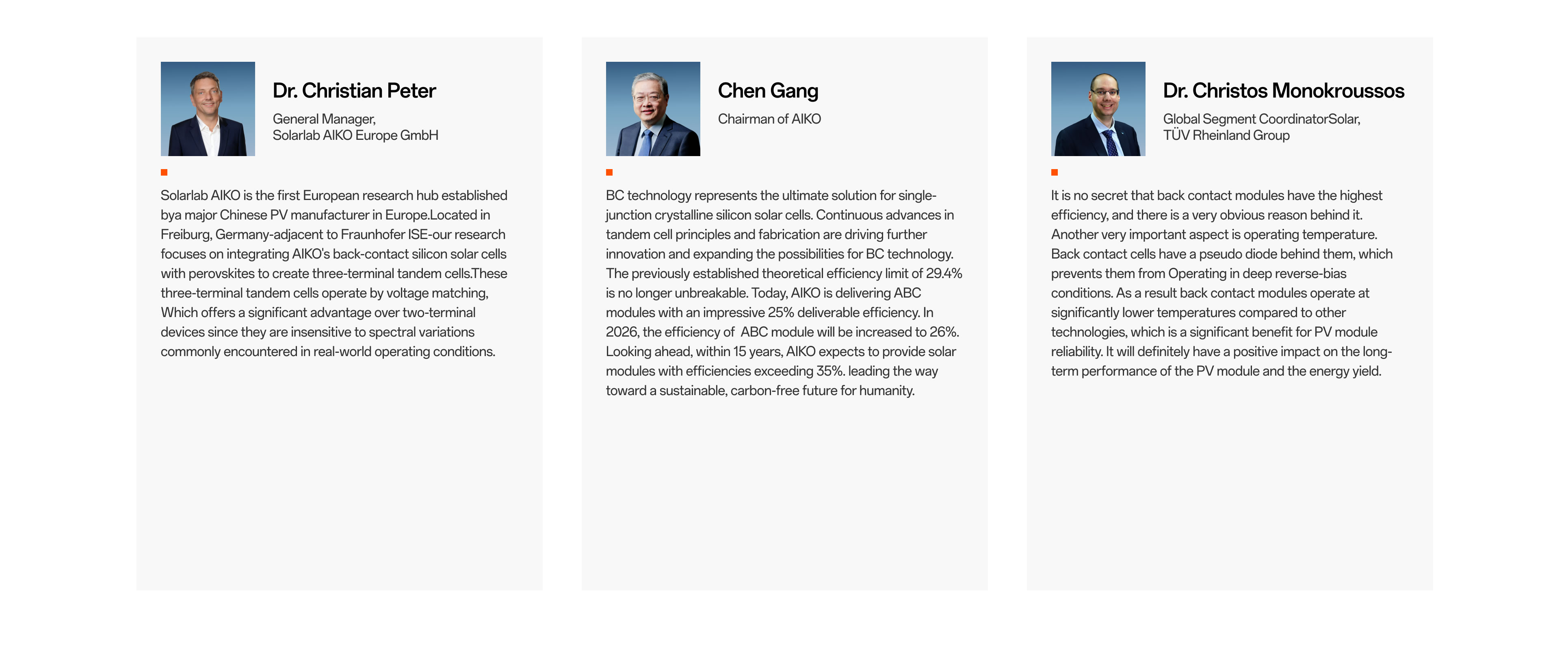
N-Type ABC Technology – Leading Humanity into the Carbon-Free Era
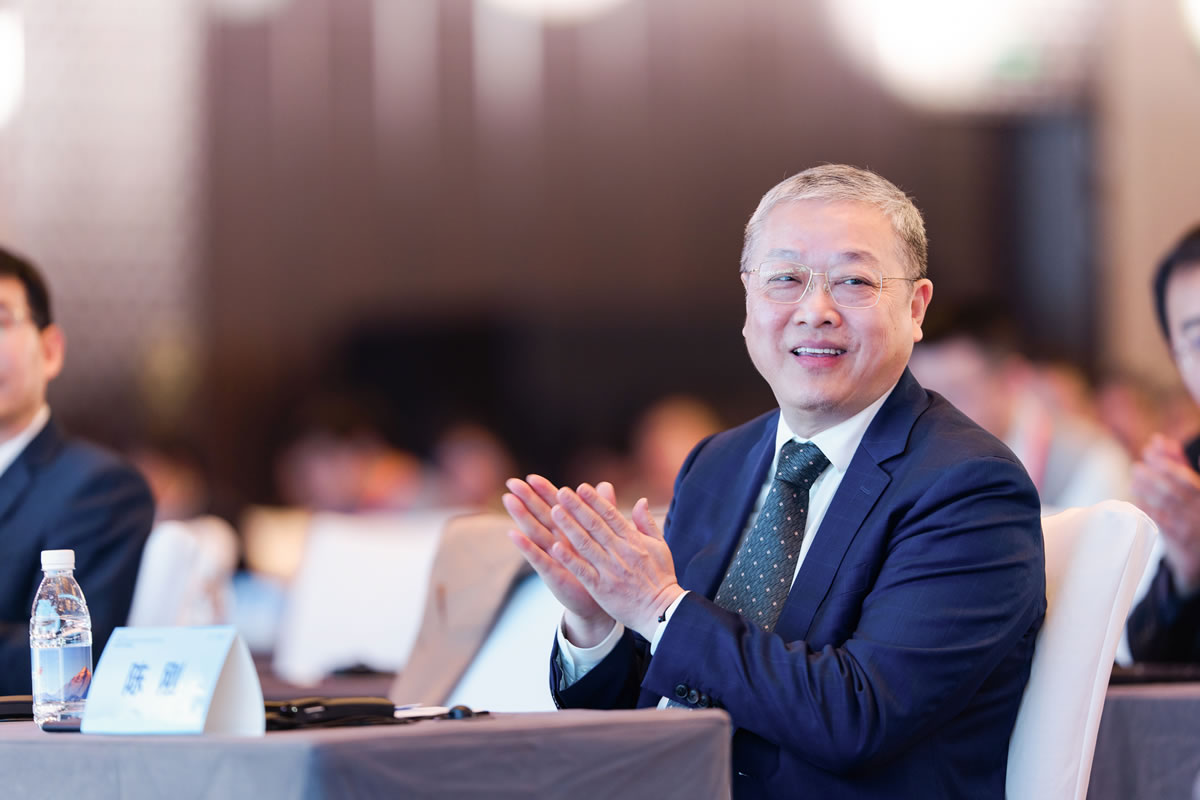
Chairman of AIKO :Gang Chen
11:00 – 12:30
2. BC tech Roundtable Forum
Roundtable Forum
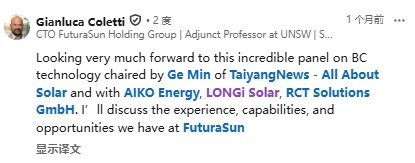
TaiyangNews Min Ge 、Chief Scientist of AIKO:Yongqian Wang 、 LONGi: HongBo Tong 、Prof. Dr. Peter Fath、 Dr. Gianluca Coletti
12:30 – 14:00
Lunch
14:00 – 15:00
3. High quality material, ingot production
Executing Overseas Ingot & Wafer Factories at Industrial Scale
Founder & CEO, RCT Solutions GmbH:Prof. Dr. Peter Fath
Trends For FBR Granular Polysilicon Technology
Deputy Director of GCL TECH Global R&D Center for Silicon Materials:Dr. Liu Tao
15:00 – 16:00
Break
16:00 – 17:30
4. Bifacial BC cell R&D
ISC Konstanz :Lejo Joseph Koduvelikulathu
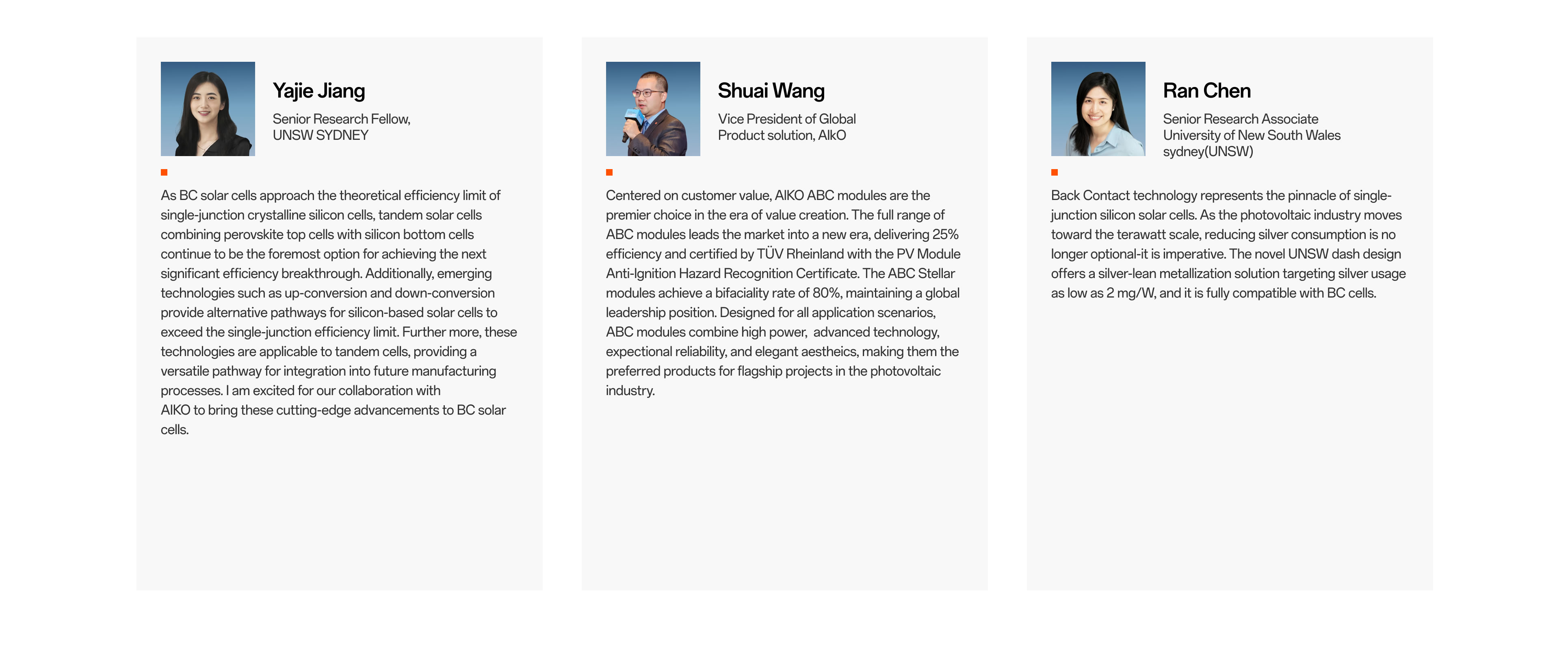
UNSW:Jessica Yajie Jiang
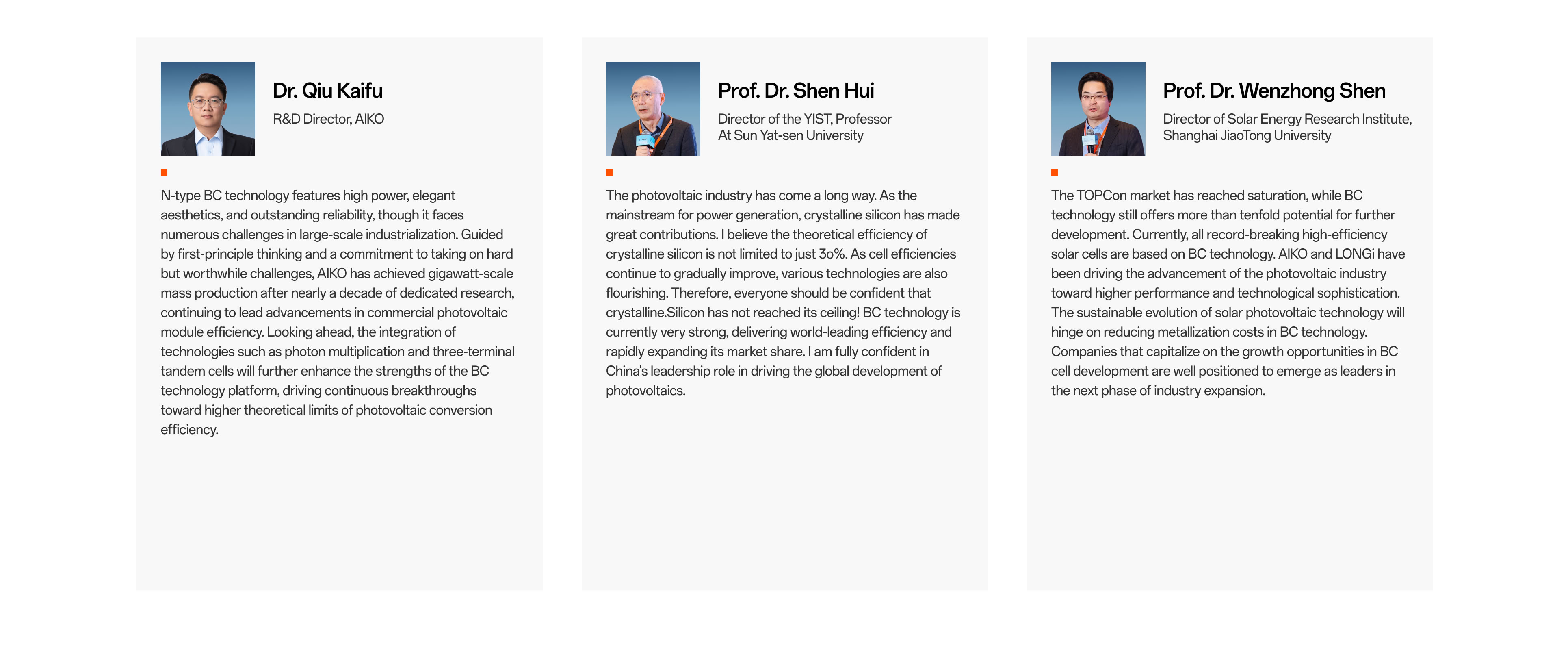
Technical Director of AIKO:Kaifu Qiu
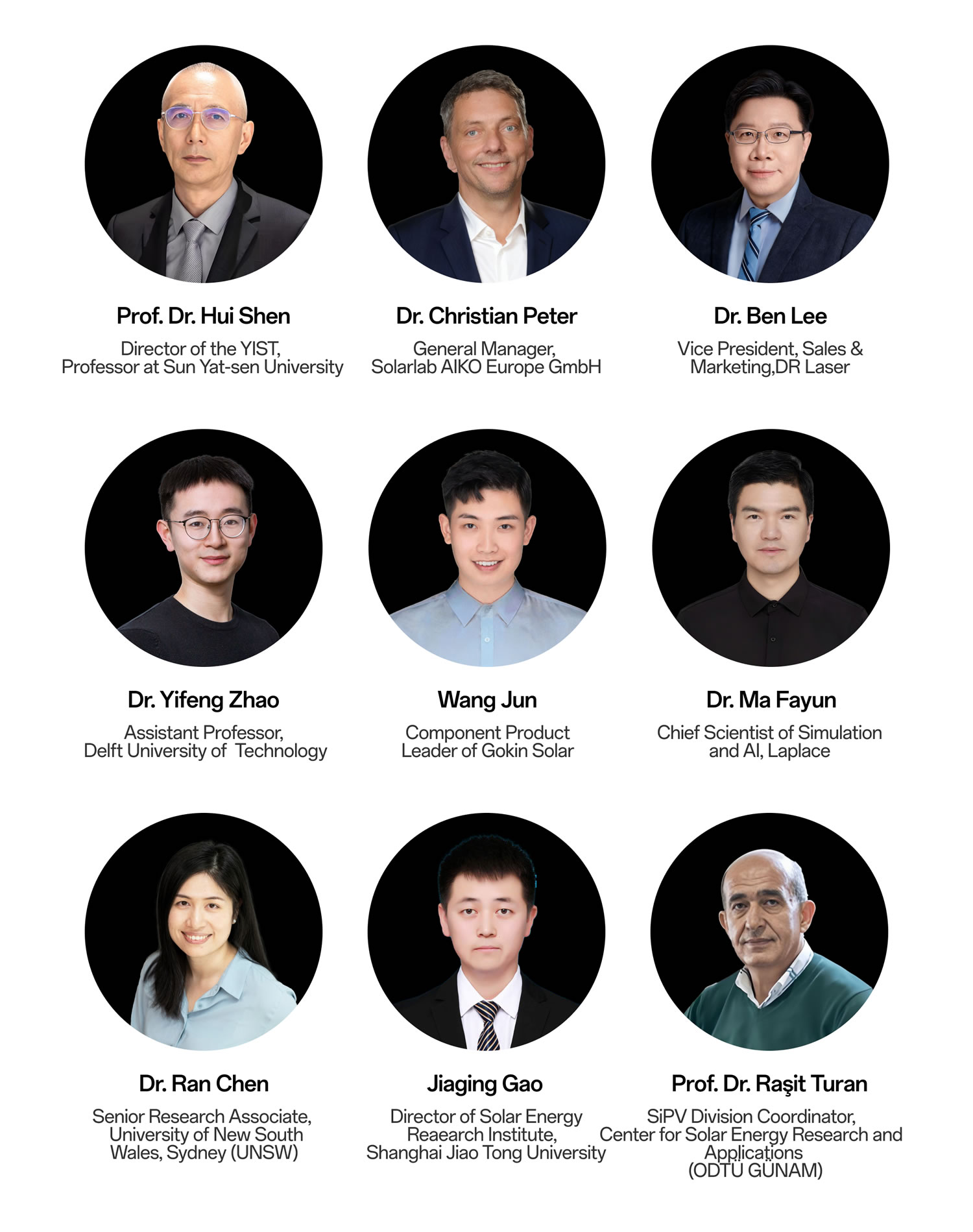
Assistant Professor, Delft University of Technology:Dr. Zhao Yifeng
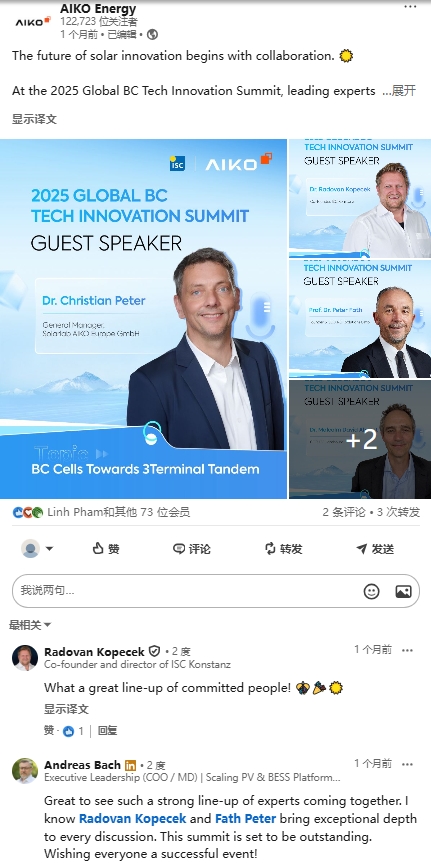
Ultra-lean Silver Screen Printing
Senior Research Associate, University of New South Wales, Sydney (UNSW):Ran Chen
AIKO:Christian Peter
19:00 – 23:00
Dinner
9:00 – 9:45
5. BC wafer and cell production
Why Will Crystal Silicon xBC Solar Cells be Highly Promising?
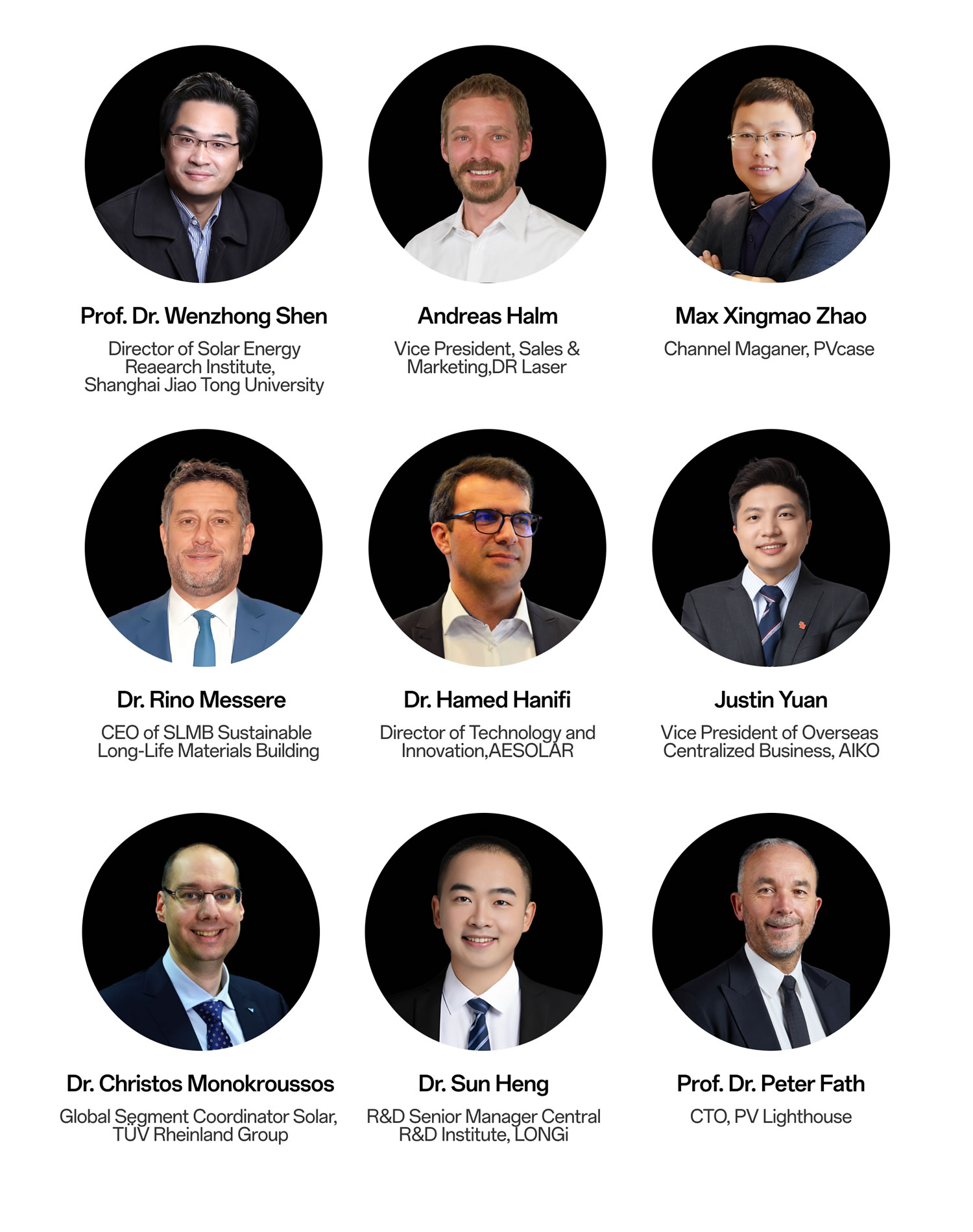
Solar Energy Research Institute (SJTU):Prof. Dr. Wenzhong Shen
Advanced Laser Technology Empowering Next-Generation Back-Contact PV Manufacturing
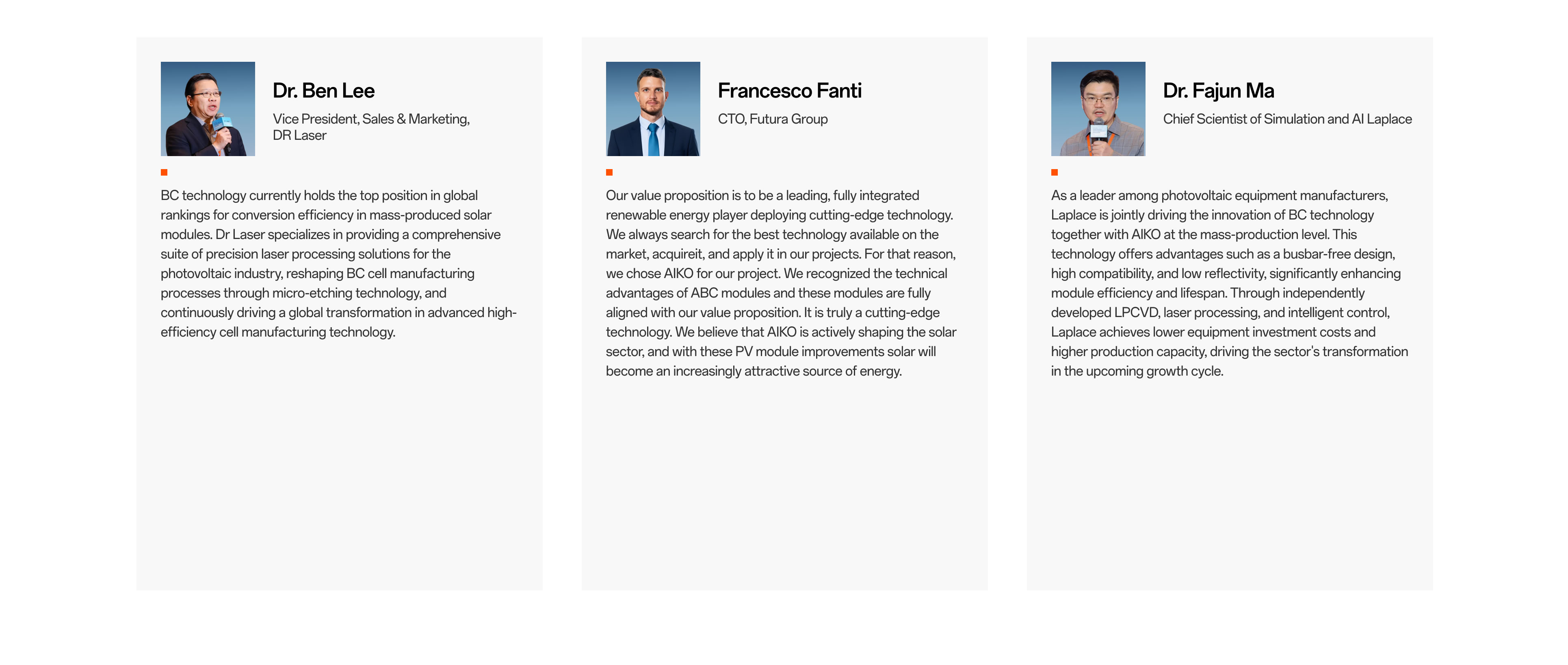
Vice President of Sales & Marketing, DR Laser:Ben Lee
Gokin Solar :Jun Wang
Chief Scientist of Simulation and AI, Laplace :FaJun Ma
Next Generation PECVD
Centrotherm International AG:Helge Haverkamp
9:45 – 10:45
Break
10:45 – 12:15
6. BC module and material production
ISC Konstanz:Andreas Halm
SPIC:Gao JiaQing
Innovation on High-Efficiency HPBC Technology
LONGi Green Energy:Dr. Heng Sun
High quality glass for Photovoltaic, from monofacial to bifacial modules
SLMB:Dr. Rino MESSERE
AE Solar:Hamed Hanifi
12:00 – 14:00
Lunch
14:00 – 15:15
7. Evaluation and Quality
Quokka:Dr. Andreas Fell
Beyond Efficiency: A Deep Dive into the Performance and Reliability of BC Modules
TÜV Rheinland Group:Dr. Christos Monokroussos
PV Lighthouse :Dr. Malcom Abbott
15:15 – 16:00
Break
16:00 – 17:15
8. PV systems: application and safety
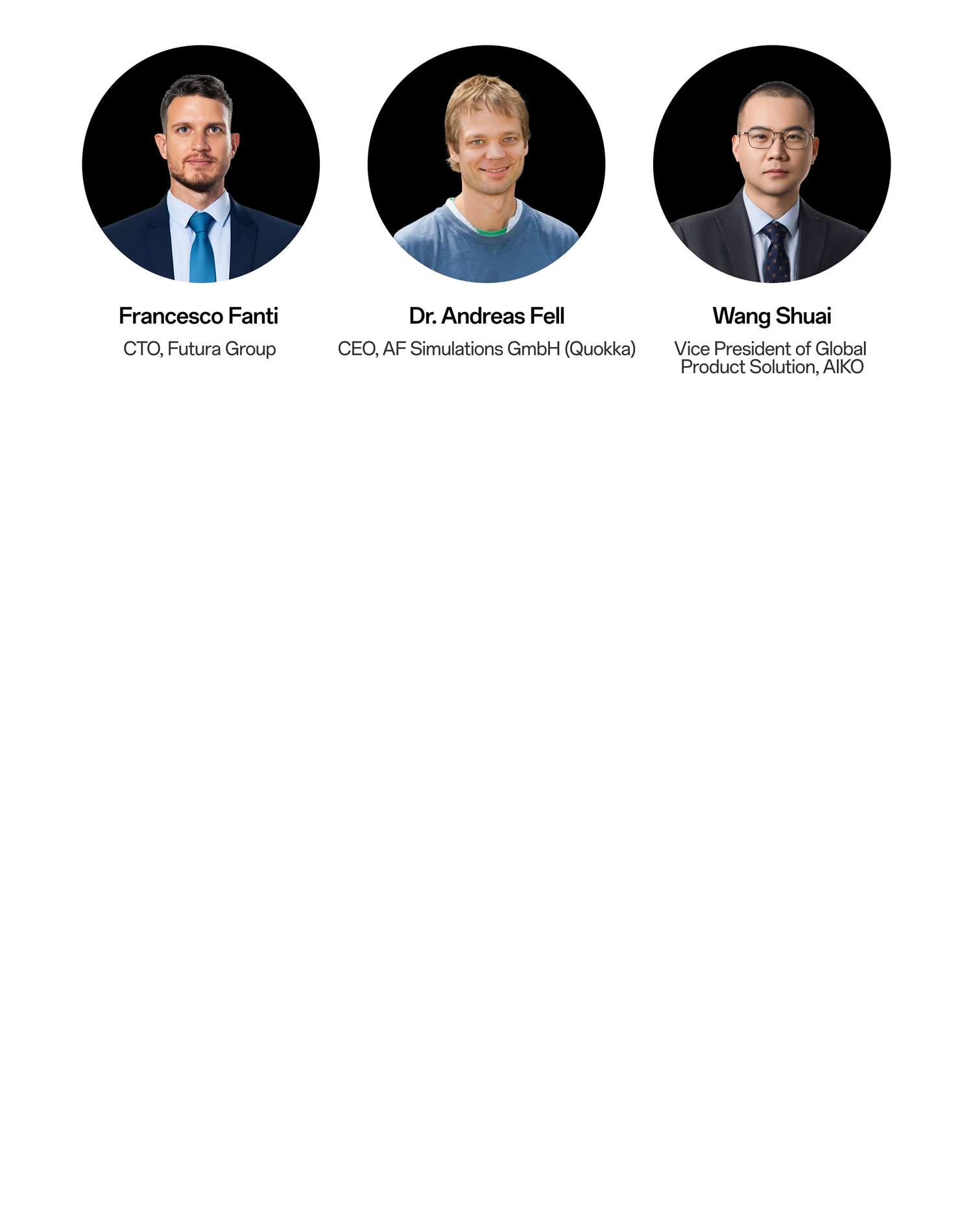
Futura Group:Francesco Fanti
AIKO:Shuai Wang
ODTÜ GÜNAM:Raşit TURAN
FINAL DISCUSSION, CLOSING AND NEXT BIFIPV WORKSHOP
ISC Konstanz:Radovan Kopecek
Leading the High-Quality Development of the PV Industry
BC Innovation Ecosystem Forum
Chen Gang, Chairman of AIKO , Li Zhigang ,Chairman of DR Laser , Fan RuiWu Chairman of Skyworth PV, Li Weichun, Vice President of Global Power Electronics Product Services of TÜV Rheinland, RongBing Xia, Deputy General Manager of Laplace, FengaAn ,Gao Executive Managing Director of Rainbow New Energy, and Lv Fang, Secretary-General of the Photovoltaic Specialised Committee of the China Green Supply Chain Alliance,
gathered together to discuss BC. They deliberated on the value, advantages, and future prospects of BC technology, unanimously agreeing that BC represents the most cost-effective and competitive crystalline silicon technology route currently available, constituting the optimal technical approach within the crystalline silicon pathway.


BC Technology: The Next Big Thing is Here
Round Table Forum
The panel featured Dr. Yongqian Wang, Chief Scientist of AIKO; Dr. Hongbo Tong, President of The First Research Institute at LONGi; Prof. Dr. Peter Fath, CEO of RCT Solutions GmbH; and Dr. Gianluca Coletti, CTO of the FuturaSun Group, and moderated by Min Ge, Co-founder of TaiyangNews. The discussion highlighted BC’s superior value proposition, anchored not only in higher efficiency but also in greater reliability, safety, and a lower Levelized Cost of Energy (LCOE). While acknowledging current cost challenges, the panelists outlined a clear path for BC’s expansion beyond premium rooftops into utility-scale markets. They emphasized that success hinges on continued manufacturing innovations to improve yield and reduce costs,
alongside robust supply chain collaboration.

Dr.YongQian Wang
Chief Scientist of AIKO
Back Contact (BC) technology has become the main stream solution in the photovoltaic industry andis recognized as the pinnacle of crystalline silicon solar cell advancements. AlkO is accelerating the development of its ABC modules, targeting efficiencies above 26% while consistently securing a 4 to 6-tier power advantage over TOPCon modules.

Dr. HongBo Tong
President of The First Research Institute, LONGi
BC solar cells are widely regarded as the structure that enables practical efficiencies closest to the theoretical limit of single-junction silicon solar cells, offering a significant power advantage over TOPCon modules. By integrating the unique features of the BC structure into module design, the Hi-Mo X10 series achieves fire resistance, shading tolerance, and dust resistance, making it adaptable to various use-case scenarios. Looking ahead, BC technology is expected to find even broader applications in both utility-scale and distributed photovoltaic systems, thereby delivering greater value to customers.

Dr. Peter Fath
CEO, RCT Solutions GmbH
As a European, l am looking into the European market. Europe has a very strong market segment called premium distributed PV. Customers have limited roof space or high power consumption. They need the highest performing product. The only solution is BC. Because of regulations in Europe, module integration on roofs has to be aesthetic.lf you compare BC to HJT, there is another advantage.

Dr. Gianluca Coletti
CTO, FuturaSun Group
With BC technology, everyone can explain to their neighbors what the advantages are. Just look at it-you cannot see any contacts on the front side. From a technology development perspective, it brings complexity. But for the customer, it is what they value most.It is on their building, and they want to see something highly aesthetic. Especially for us as an ltalian company, this is an additional added value. Another increasingly important aspect is reliability. BC technology offers better reliability in suppressing hotspot conditions in the operating field.This is important not only for residential applications but for all segments ,including utility-scale.
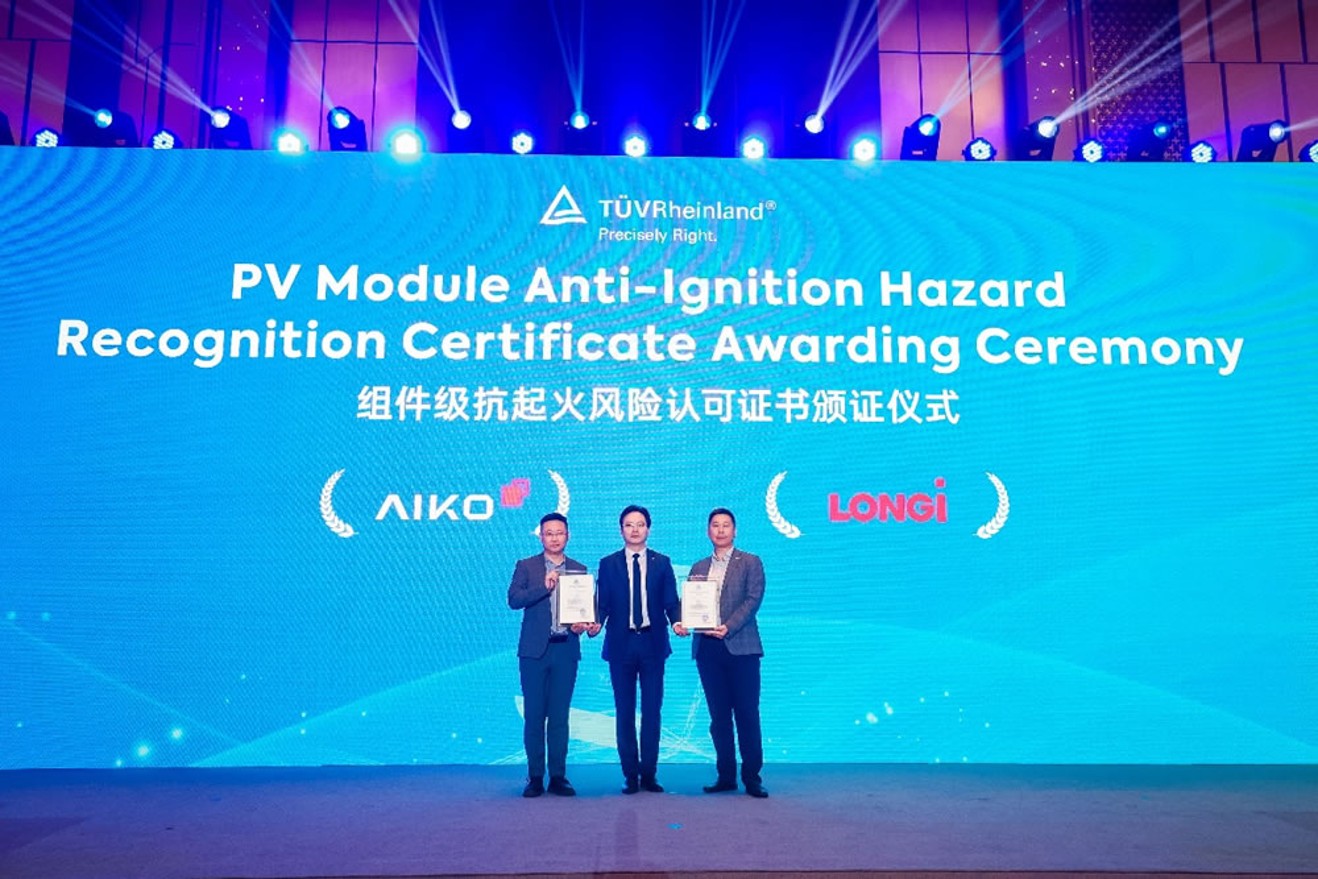
TÜV Rheinland: Certification Ceremony for
PV Module Anti-Ignition Hazard
PV Module Anti-Ignition Hazard
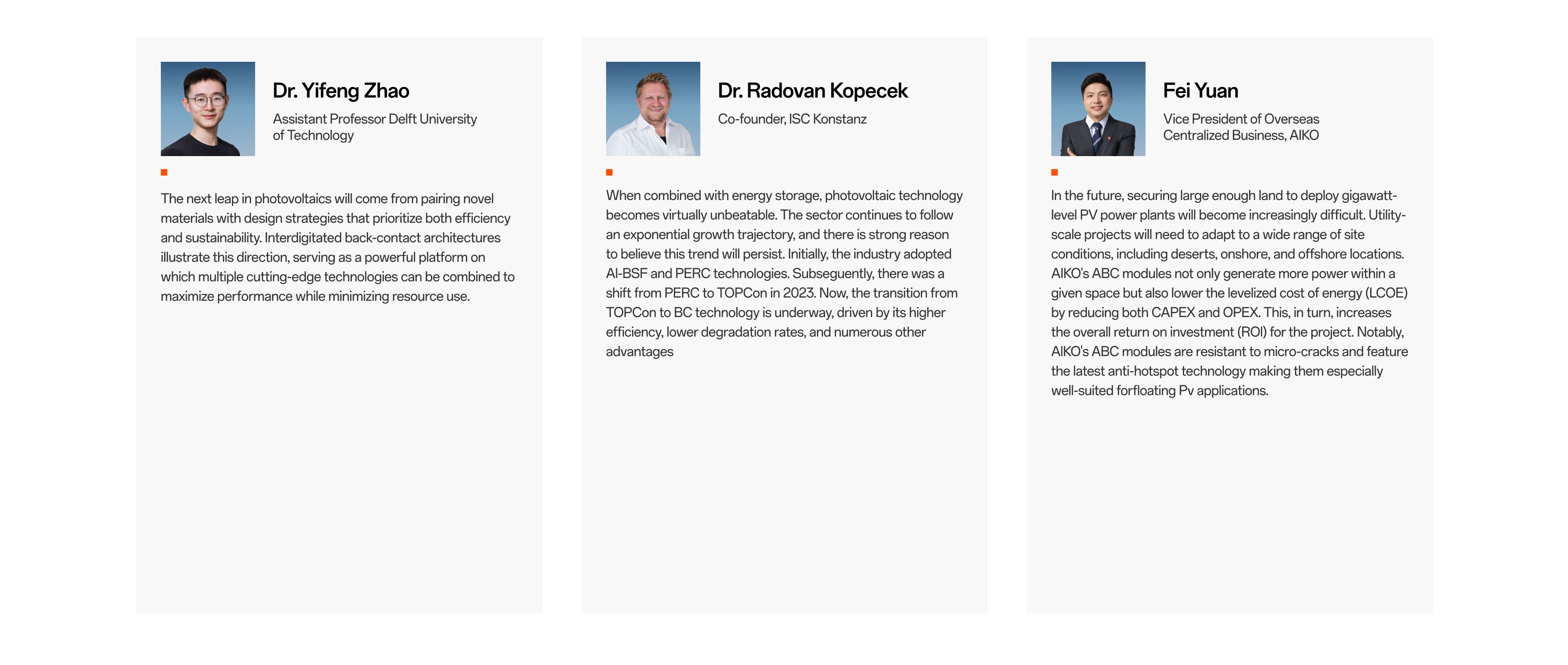
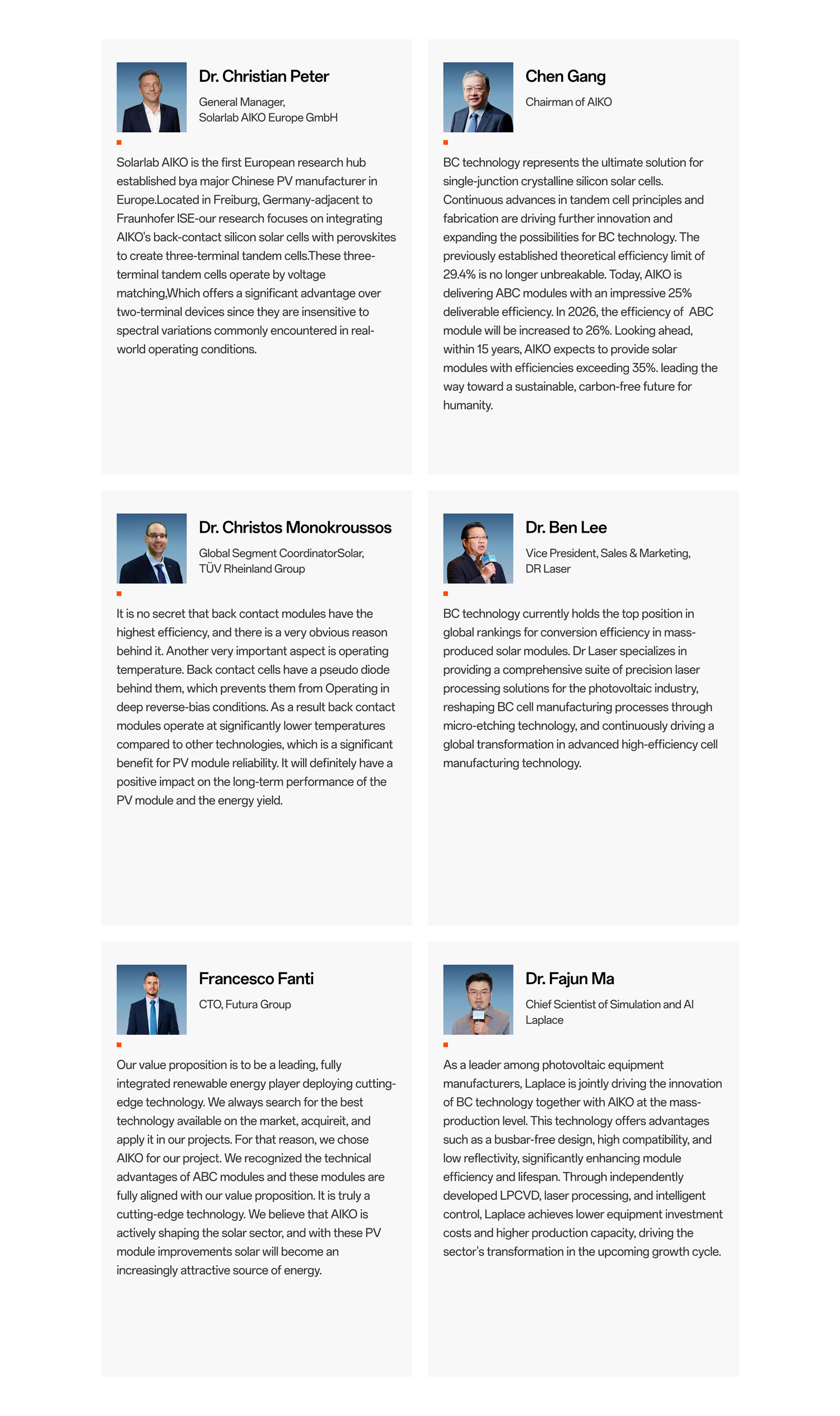
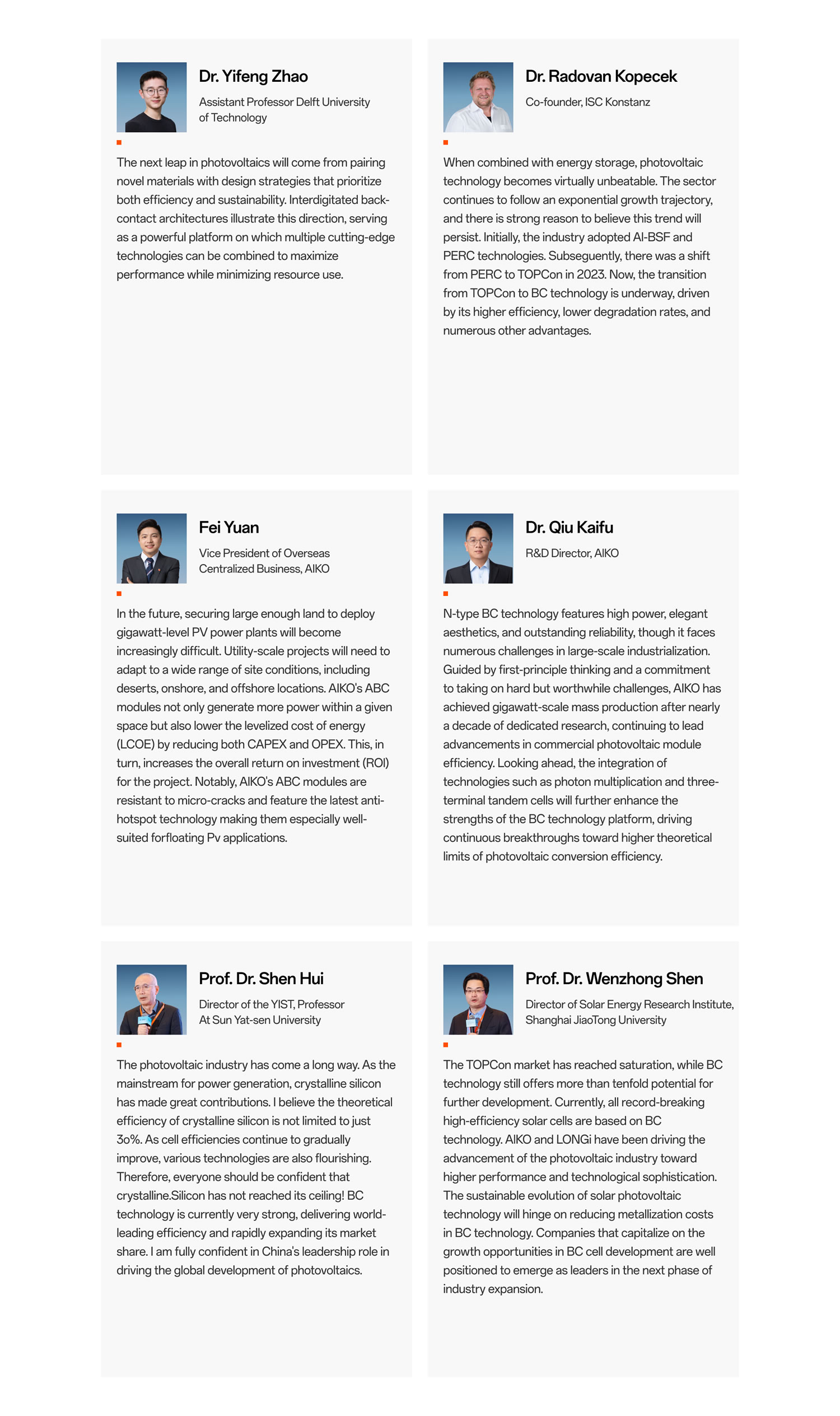
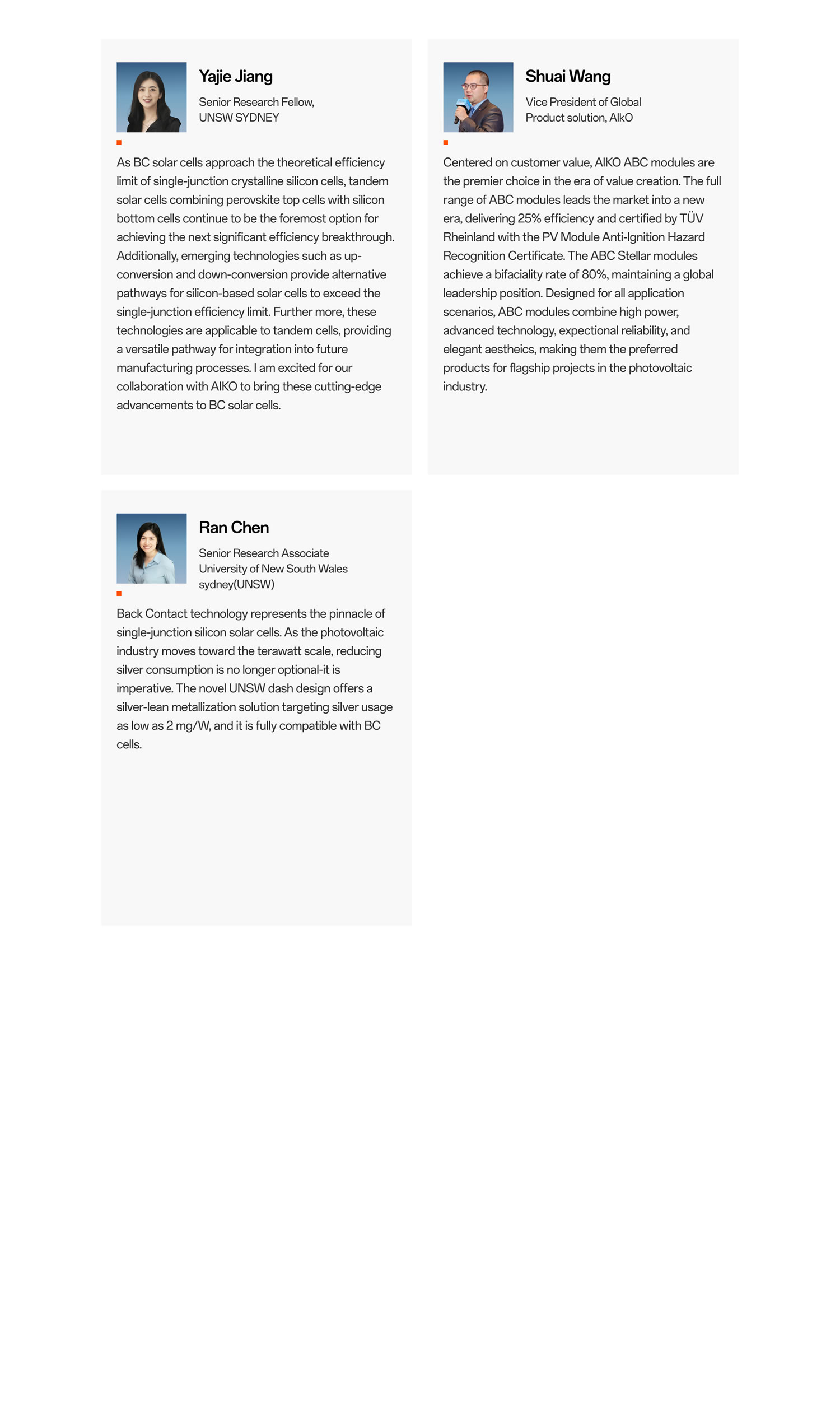
Voices from the Summit
Co-organized by International Solar Energy Research Center Konstanz (ISC Konstanz) and AIKO, the summit attracted over 600 leading research scholars, technical experts, and top managers from prominent PV companies and institutions worldwide, marking a significant milestone in the advancement of back contact (BC) technology. The summit served as a platform for in-depth exchanges among companies and institutions specializing in silicon materials, wafers, cell and module R&D, manufacturing, testing, and system integration.