


Battery vs. Export: Where Does Your Solar Dollar Go Further in 2026?
April 10th, 2026
In 2026, most Australian solar households get more value from using or storing their solar power than from exporting it for a low feed-in tariff. Grid electricity often costs 30–50c/kWh, while feed-in tariffs commonly sit around 2–10c/kWh. That gap means your next solar dollar should focus on self-consumption, battery storage and panel quality, not just chasing the highest FiT.
Quick Answer – Self-consumption is the new hero
Self-consumption now drives most of the savings from rooftop solar. Feed-in tariffs used to be generous enough that “set and forget” exports could carry a big slice of your bill reduction, but most current guides now describe FiTs as a shrinking bonus, not the main benefit of going solar.
The highest returns in 2026 usually come from:
- Using more of your solar in real time.
- Storing surplus energy in a battery for use later.
- Choosing panels that keep producing more energy, for longer.
Battery vs export is not a simple yes or no question. It is about understanding where each kilowatt-hour does the most financial work for your home.
What changed with feed-in tariffs?
Feed-in tariffs started as high incentives that often paid more per kilowatt-hour than the price of grid electricity. That made exporting a strong revenue stream in the early days of rooftop solar. Over time, as more solar has flooded the grid in the middle of the day, wholesale prices during sunny hours have fallen and regulators and retailers have steadily reduced FiTs.
By 2026:
- Many Australian FiTs sit around 2–7c/kWh, with some retailers offering up to roughly 10c/kWh in specific plans or export windows.
- Typical residential grid tariffs often land in the 30–45c/kWh range at standard or peak times, even after adjustments to default offers.
Industry articles now openly describe FiTs as “dead” in the sense that they are no longer a major profit centre. Instead, they are a modest credit sitting alongside much higher usage charges. That is the context for the shift toward self-consumption and batteries.
Battery vs export: which gives better value per kWh?
From a value-per-kilowatt-hour perspective, batteries and self-consumption usually beat exports in 2026.
In an export-only scenario, you might export surplus solar for 3–10c/kWh and then buy electricity back in the evening at 35–50c/kWh. In a battery scenario, instead of exporting, the same surplus solar is stored in a battery and used at night, avoiding the 35–50c/kWh grid charge, minus some round-trip efficiency losses.
That means each kilowatt-hour you shift from export to stored self-consumption can improve your position by roughly tens of cents per kilowatt-hour in many parts of Australia, before factoring in battery hardware and installation costs. Over thousands of kilowatt-hours each year, that gap is what funds the battery payback period.
Export-only often suits:
- Lower-usage homes.
- Households that can shift significant load into the day.
- People expecting to move in a few years.
Solar plus battery suits:
- High evening-use families.
- EV owners who mainly charge at night.
- Fully electrified homes with strong winter and evening demand.
- Long-term residents with access to rebates or virtual power plant programs.
Three ways your solar can save you money in 2026
Every rooftop solar system can deliver value in three main ways:
- Self-consumption: You run appliances while the sun is shining so you avoid buying that energy from the grid at full retail prices.
- Exporting to the grid: You send surplus solar back and receive a FiT credit, typically a fraction of what you pay for imports.
- Charging a home battery: You store excess solar during the day and use it at night, replacing high-priced grid electricity during peak times.
Because FiTs are now low while retail tariffs remain high, self-consumption and battery-shifted solar are both far more valuable per kilowatt-hour than exports.
Why panel technology matters more in a low-FiT market
Panel choice matters more when FiTs are low and self-consumption is king. A low-FiT market rewards systems that produce more usable energy from limited roof space over more years, because most of that energy is now being consumed or stored rather than exported. For homeowners with shading constraints, smaller roofs or higher daytime loads, higher-efficiency modules can noticeably increase total self-consumed energy and strengthen long-term savings.
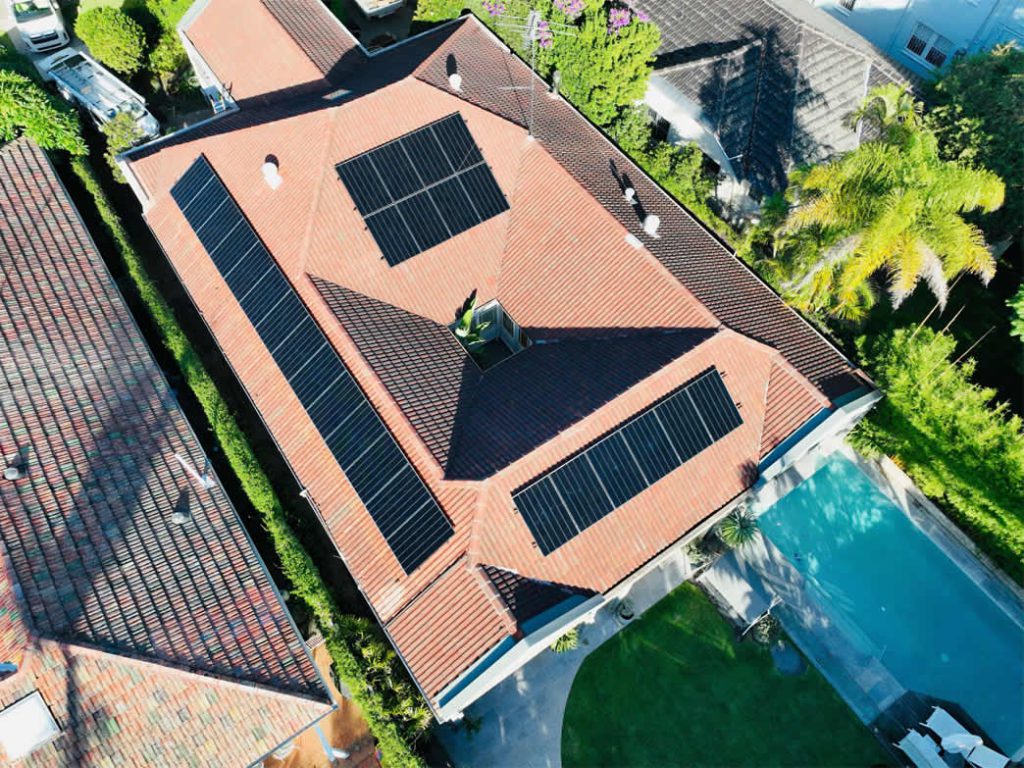
AIKO’s proprietary copper interconnection is designed to reduce the microcrack and bonding issues associated with traditional silver-based approaches, which supports better durability and lower long-term performance loss. This matters in Australian conditions, where panels face repeated thermal cycling, strong UV exposure and mechanical stress over many years. When homeowners are no longer being rewarded for bulk daytime export, preserving more generation over the life of the system becomes commercially critical, because every extra kilowatt-hour is used or stored rather than sold cheaply back to the grid.
Why this matters for homeowners
For homeowners, the key change is that self-consumption is now the main economic engine of a solar system. This shift affects both new and existing solar owners. Households with older systems may need to revisit how and when they use energy during the day. Households shopping for solar should prioritise generation quality, long-term yield and compatibility with batteries or smart load shifting instead of thinking only about FiT rates.
What homeowners should do now?
1. Check your current retailer plan
The first step is to make sure your plan still makes sense. Not every retailer pays the bare minimum, and some still offer premium FiT rates for a limited daily export volume or under specific tariff structures. That means the plan you choose now matters more than ever. Two households with identical solar can see very different outcomes depending on their retailer, FiT and usage tariffs.
Start by:
- Checking your latest bill or online account for your FiT rate and usage tariffs (off-peak, shoulder, peak where applicable).
- Comparing your FiT with the range of offers in your state through independent comparison tools or updated FiT guides.
If your FiT is low and your usage tariffs are high, simply changing plans or retailers can boost your outcomes before you touch any hardware.
2. Shift more usage into solar hours
The next step is to use more of your solar in the middle of the day. Running high-load appliances during the day is one of the easiest ways to improve solar economics. Because self-consumed energy avoids paying a high rate for grid electricity, every kilowatt-hour you move into daylight can deliver many times the value of exporting it for a few cents.
Practical changes include:
- Using delay start on dishwashers, washing machines and dryers so they run between roughly 10am and 2pm.
- Shifting pool pumps, hot water boosters and EV charging, where possible, into solar hours instead of evenings.
- Avoiding running lots of big loads simultaneously at night if they could easily be scheduled for the middle of the day.
Some 2026 guides suggest that lifting self-consumption from around 30 percent to 50–60 percent through load shifting alone can dramatically increase annual savings compared with exporting that energy at 2–7c/kWh.
3. Reassess the case for a battery
Once you understand your usage and exports, reassess whether a battery makes sense for your home. As daytime export value falls, the value of storing daytime solar for evening use increases. A battery does not create extra energy, but it takes solar that would have been exported cheaply and moves it into the evening peak, where each kilowatt-hour is worth the full retail rate you avoid paying.
Batteries tend to make more sense when:
- You have high evening or night-time usage from cooking, entertainment, heating and cooling or home offices.
- You regularly export a lot of solar during the day that could instead be stored.
- You charge an EV at home mainly overnight or have heavily electrified heating and hot water.
- You can access rebates, low-cost finance or virtual power plant payments that shorten payback.
Australian payback studies in 2026 suggest that for these households, batteries can now sit in a typical mid-single to low-double digit year payback window, especially when incentives are included. For very low-usage or short-stay households, export-only solar may still win on simplicity and cost.
4. Think harder about panel quality
Finally, look at the quality of the panels themselves. If exported energy is worth very little, each extra kilowatt-hour you can use yourself matters more. That puts more emphasis on panels that deliver high efficiency, good temperature performance and stable long-term output, rather than simply chasing the lowest upfront module price.
Key technical factors that now have direct financial impact include:
- Efficiency: Modern panels commonly achieve high efficiency and higher power ratings, producing more energy from the same roof area than older 250–300W modules.
- Degradation: Independent tests show typical modern panels degrade around a small percentage per year, while premium modules can be warranted at lower degradation rates, resulting in higher lifetime energy yield.
- Temperature behaviour: Panels that hold performance better in heat can produce more usable energy in Australian summer conditions.
Over 25 years, small differences in annual degradation and temperature performance can translate into thousands of extra kilowatt-hours, which is increasingly important when those kilowatt-hours are being used or stored, not sold cheaply.
What installers should say now
For most households, the customer story has shifted from “earn money from exports” to “keep more of your solar and buy less from the grid”. That is a simple message that matches what people see on their bills.
A smart installer conversation now does three things:
- Starts with the customer’s energy usage profile and asks about future needs.
- Explains clearly how low feed-in tariffs, self-consumption and batteries change the value of each kilowatt-hour.
- Shows how better panel technology can lift both immediate output and long-term yield, so the system keeps saving even as tariffs and prices move.
Framing the discussion this way helps customers look past “what is the cheapest system?” and focus on “what will work best for my home over the long term?”. That is better for the homeowner, who gets a system that actually meets their needs, and better for installers, who can design higher-quality jobs and build ongoing relationships instead of one-off price fights.